How to Welcome a New Season of Clear Water, Healthy Fish, and Vibrant Pond Life
Spring is the season every Massachusetts pond owner looks forward to all winter long. After months of snow, ice, and gray skies, there's nothing quite like the moment your water warms, your fish wake up, your plants start pushing through, and the entire ecosystem comes back to life.
But a great spring doesn't happen by accident—especially in New England, where March can feel like winter one day and spring the next. A little planning and a few well-timed steps make the difference between a pond that struggles with algae and murky water, and one that starts the season clean, balanced, and ready for months of enjoyment.
We've been opening ponds across Massachusetts for over 18 years—from MetroWest backyards in Wellesley and Newton to properties in Worcester County, the North Shore, and beyond. This month-by-month guide breaks spring startup into easy, manageable stages so you never have to wonder what to do or when to do it.
Whether you're a first-time pond owner or a seasoned pro, this plan sets the foundation for a healthy, beautiful pond all year long.
Prefer to leave it to the pros? Our team handles hundreds of spring cleanouts every season across Massachusetts. Schedule your spring cleanout or call us at (774) 437-1160 before our calendar fills up.
March: Wake-Up Prep
March in Massachusetts is all about getting your pond ready for action once the ice melts, even if the water is still chilly and snow is still on the ground. You're not doing a full cleanout yet—this is about assessment, preparation, and giving your ecosystem a head start.
Clear Out Winter Debris
Remove leaves, twigs, and windblown debris from the surface and from around the edges of your pond before they sink to the bottom. Decomposing organic matter feeds algae blooms and degrades water quality once temperatures rise. If you used a leaf net last fall, this job should be minimal. If you didn't—make a mental note to install one next October.
Check Your Equipment
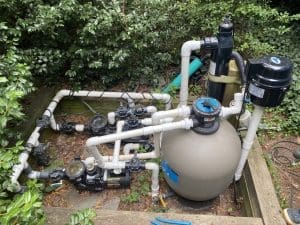
Inspect pumps, filters, and any other equipment you may have stored for winter. Make sure everything is clean, functioning, and ready to reinstall when the time comes. Look for cracked housings, worn impellers, and any winter damage. It's much better to discover a problem now while you have time to order replacement parts than when you're trying to get the pond running in April.
Monitor Water Temperature
Even before fish become active, place a thermometer in your pond. This is your single most important tool for spring timing. Water temperature tells you when to start feeding fish, when to add bacteria, and when to switch between cold-water and warm-water treatments. If you'd like to go further, you can also test the water for ammonia, nitrites, pH, KH, and copper—but temperature is the number one thing to track.
Add Early-Season Beneficial Bacteria
This is the step most pond owners skip—and it's one of the most impactful. Cold-water beneficial bacteria formulas are designed to work in temperatures between 32°F and 50°F. They jump-start your biological filtration while the pond is still cold, breaking down organic debris and preventing the spring clarity issues that catch so many pond owners off guard.
Starting bacteria treatments early gives your pond's ecosystem a running start before warmer temperatures trigger algae growth.
April: Cleanout and System Restart
By April, water temperatures begin to rise, fish are waking up, and it's time for a deeper refresh. This is when most Massachusetts ponds are ready for their annual cleanout—the single most important maintenance event of the year.
Full or Partial Cleanout
Depending on your pond's condition, you'll want to perform either a thorough full cleanout or a lighter partial refresh. A full cleanout involves draining the pond, temporarily housing fish, power-washing rocks and gravel, cleaning all filtration media, trimming back dead plant material, and refilling with fresh water. A partial cleanout might involve sludge removal, filter cleaning, and debris netting without a full drain.
We highly recommend a full cleanout every spring—it's the single best thing you can do for your pond's long-term health. If that's not possible due to budget or scheduling, we recommend not going longer than every other year. Beyond two years without a full cleanout, sludge and organic buildup start creating water quality issues that are much harder (and more expensive) to correct.
How do you know which level your pond needs? If you can't see the bottom, if there's a thick layer of sludge on the rocks, or if the water has a strong odor—it's definitely time for a full cleanout.
One important tip: during a cleanout, we always recommend reusing as much of the clean original pond water as possible, topping off with fresh water from the hose only as needed. Your existing pond water is full of established beneficial bacteria and microorganisms that help your fish and ecosystem bounce back much faster after a cleanout. Dumping all of that and starting with 100% tap water means your biological filtration has to rebuild from scratch—so save what you can.
Our most popular spring service: Professional spring cleanouts are what we're known for. We handle the draining, fish care, cleaning, and refilling so you can skip straight to enjoying your pond. Learn more about our maintenance services.
Detoxify New Water
When refilling your pond after a cleanout or water change, always neutralize chlorine and chloramines with a pond detoxifier. Massachusetts municipal water contains chemicals that are safe for us to drink but harmful to fish. This step takes 30 seconds and protects your fish from potentially fatal exposure to tap-water chemicals. Never skip it.
Reinstall Pumps and Filters
If you shut your pond system down for winter, now is the time to take your main pump out of storage and reinstall it. Confirm that it's seated properly in the skimmer or in the pond, prime it if needed, and verify it's running efficiently. Check for proper water flow through your entire system—skimmer to biofalls, through the waterfall, and back to the pond. Any reduction in flow could indicate a clog or pump issue.
Divide and Repot Plants
Hardy marginal plants and waterlilies begin waking up in April. This is the best time to divide overcrowded plants, repot them in fresh aquatic soil, and fertilize them for strong summer growth. Plants that have outgrown their pots become root-bound and produce fewer blooms. Dividing them now gives them the entire growing season to establish.
Begin Feeding Fish (Lightly)
Once your water temperature consistently reaches 50°F, you can begin offering a cold-temperature fish food. Your koi and goldfish have been in a near-dormant state all winter, and their metabolism rises slowly. Small, infrequent feedings are key at this stage—once every few days, only as much as they'll consume in a few minutes. Overfeeding at this stage is one of the most common spring mistakes because uneaten food decays and spikes ammonia levels.
May: Build Momentum and Establish Balance
May is when your Massachusetts pond truly comes alive. The water is warming, fish are active, plants are growing, and the ecosystem is shifting into summer mode. This is the time to guide everything into a healthy rhythm.
Switch to Standard Beneficial Bacteria
Once your water temperature is consistently above 60°F, switch from your cold-water bacteria formula to a standard beneficial bacteria. This is the workhorse of your pond maintenance program—regular bacteria treatments help establish and maintain balanced, healthy water all season long. Most pond owners dose their bacteria weekly throughout the warm months.
Monitor Fish Behavior
With fish fully active and plants growing rapidly, your pond's nitrogen cycle is shifting fast. Watch your fish carefully for any signs of unusual behavior—gasping at the surface, flashing (rubbing against rocks), lethargy, loss of appetite, or visible spots or sores. Spring is when fish immune systems are at their most vulnerable after the long winter. Catching problems early makes treatment much easier and more effective.
Revisit Your Planting
May is when you'll want to start thinking about new plants, but here's something to keep in mind: most reputable aquatic plant retailers won't release their stock until late May or even June, depending on the weather and temperatures that year. Growers hold plants until conditions are safe for shipping and transplanting, so don't be surprised if your favorite nursery isn't taking orders yet in early May. Use the first half of the month to plan what you want and where it'll go, then be ready to order once plants become available.
When you do get your plants, add new marginal plants, floating plants, and oxygenating plants to improve shade coverage, reduce algae, and create a lush, natural look. Aim for roughly 60-70% surface coverage by midsummer—plants are your most powerful natural algae fighters because they compete for the same nutrients algae need to thrive.
Check for Leaks and Flow Changes
Warmer weather and spring thaws can reveal minor leaks, settling rockwork, and shifts in water flow that weren't apparent during winter. The good news is that most pond leaks occur at the waterfall or stream edges—where winter frost may have shifted rocks or liner—and they're usually easy to correct. Watch your water level over a 24-hour period with the pump running. If it drops more than normal evaporation would account for, you likely have a leak worth investigating.
Increase Feeding as Fish Activity Surges
By late May, your fish should be energetic and hungry. You can begin feeding more regularly—daily or twice daily—but continue to avoid overfeeding. Uneaten food decays and causes water quality issues. Once the water temperature is consistently at 60°F, you can switch from cold-water fish food to a standard or growth-formula food.
June: Final Touches for a Strong Summer
By June, your Massachusetts pond should look and feel like its best self. The ecosystem is established, fish are thriving, and plants are filling in. This month is all about fine-tuning and building stability for the warm months ahead.
Install or Adjust Aeration
Summer heat stresses oxygen levels in your pond. Warmer water holds less dissolved oxygen, and your fish and beneficial bacteria need more of it during their most active period. Adding an aerator or boosting your existing aeration system now keeps your pond healthier all season. This is especially important if you have a heavily stocked koi pond or if your pond gets significant afternoon sun.
Add Floating Plants for Shade
Floating plants like water lettuce, water hyacinth, and mosaic plants help cool the pond, reduce algae by blocking sunlight, and create beautiful surface texture. They're also fantastic natural filters that absorb excess nutrients directly from the water. You can introduce tropical waterlilies to your pond once the water is consistently at 70°F or above—usually late June in most of Massachusetts.
Top Off Water and Monitor Evaporation
As temperatures rise, evaporation increases—sometimes significantly. A pond with a waterfall and stream can lose a noticeable amount of water on hot, windy days. Check water levels frequently to protect your pumps and skimmers from running dry. Top off your pond as needed with a garden hose, and always remember to turn the hose off. (We've seen more than a few ponds overflow because someone forgot—it happens to the best of us.)
If you're adding more than a couple inches of water, add a dose of pond detoxifier to neutralize the chlorine in the tap water.
A Season Built on Smart Preparation
Spring isn't about doing everything at once—it's about doing the right things at the right time. By moving through March, April, May, and June with purpose, you create a thriving ecosystem that supports healthy fish, strong plant growth, and clear water all season long.
The beauty of this month-by-month approach is that no single step is overwhelming. Each month builds on the last, and by the time summer arrives, your pond is poised for the best season yet.
Need Help Getting Your Pond Ready for Spring?
Whether you need a professional spring cleanout, equipment inspection, or just want expert advice on getting your pond in top shape, we're here to help.
New England Aquatic Landscaping has been helping Massachusetts pond owners enjoy their water features since 2007. As Aquascape's 2025 Regional CAC of the Year, we bring award-winning expertise to every spring cleanout and pond opening. Learn more about our team.