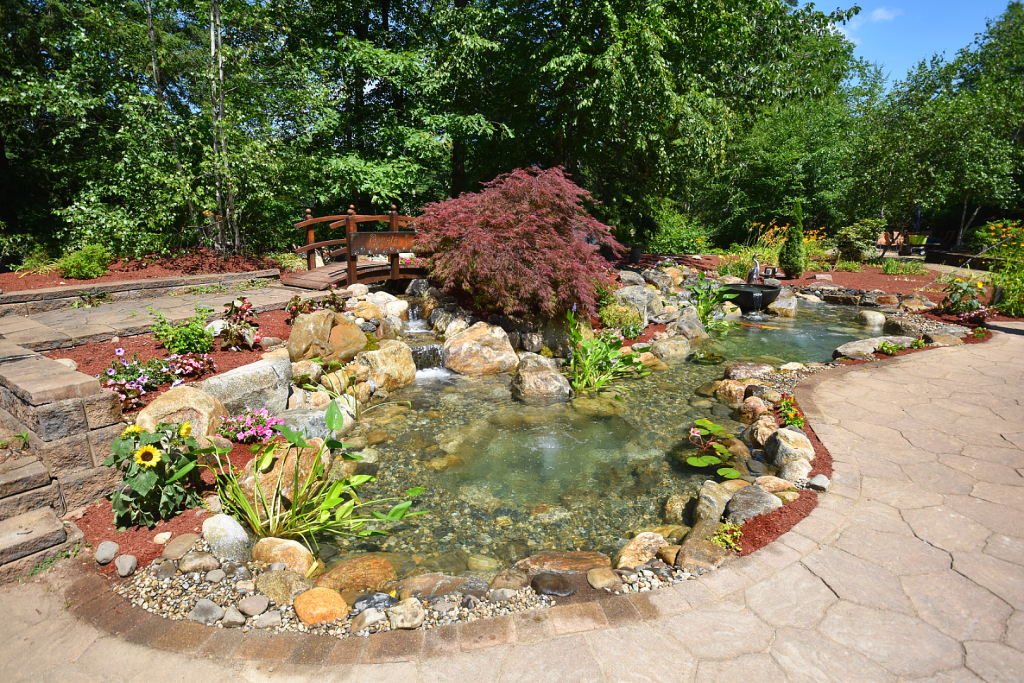
Discover how constructed wetland filters transform murky ponds into crystal-clear water features—without chemicals, without constant maintenance, and in perfect harmony with Mother Nature.
In This Article
- The Problem with Traditional Pond Filtration
- What Is a Constructed Wetland Filter?
- How Wetland Filtration Actually Works
- Why Wetland Filtration Outperforms Everything Else
- What Features Benefit from Wetland Filtration?
- The Components of a Modern Wetland Filter
- Wetland Filtration in the New England Climate
- Is Wetland Filtration Right for Your Water Feature?
- Ready to Learn More?
If you've ever struggled with green water, persistent algae, or a pond that just won't stay clear no matter what you do, you're not alone. It's one of the most common frustrations we hear from pond owners across Massachusetts and New England.
The good news? Nature already solved this problem millions of years ago. And at New England Aquatic Landscaping, we've spent years perfecting how to bring that natural solution right into your backyard.
It's called wetland filtration—and once you understand how it works, you'll wonder why anyone would filter a pond any other way.
The Problem with Traditional Pond Filtration
Here's something we see all the time: a homeowner has a pond they love, but the water is cloudy, green, or just doesn't look the way it should. So they dump in chemicals to kill the algae. The water clears up for a week or two, then turns green again. More chemicals. More frustration.
What many people don't realize is that this approach actually makes the problem worse. When you kill algae with chemicals, all that dead organic matter sinks to the bottom of your pond. It creates more sludge, more nutrients, and—you guessed it—more algae.
It's a cycle that never ends.
Traditional filtration systems like bead filters and UV clarifiers can help, but they're fighting against nature rather than working with it. They require constant cleaning, backflushing, and replacement. And they still don't address the underlying issue: too many nutrients in your water.
What Is a Constructed Wetland Filter?
A constructed wetland filter is exactly what it sounds like—a man-made version of the natural wetlands that have been purifying water on our planet for as long as there's been water.
Think about those "Protected Natural Wetlands" signs you see on trails through the woods. There's a reason the Department of Environmental Quality protects these spaces: wetlands are nature's most effective water filtration systems. Water flows slowly through layers of gravel and plant roots, where an entire ecosystem of beneficial bacteria, microorganisms, and aquatic plants work together to strip away nutrients, sediments, and impurities.
A constructed wetland filter recreates this process in your backyard. Instead of fighting nature with chemicals and mechanical equipment, you're partnering with Mother Nature to create water so clear you can count the individual pieces of gravel on the bottom of a four-foot-deep pond.
That's not an exaggeration—that's what we see in properly designed wetland systems.
How Wetland Filtration Actually Works
The magic of wetland filtration happens through a process that's both beautifully simple and remarkably sophisticated. Here's what's going on beneath the surface:
The Journey of Your Pond Water
Water is pumped from your pond (usually through a skimmer or intake bay) into the bottom of the wetland filter. From there, it begins a slow, upward journey through multiple layers of carefully selected materials.
The Sedimentation Chamber
At the very bottom, water enters through specialized modules that spread it evenly and slow it down dramatically—below two feet per second. This slow, even flow allows heavier particles and sediments to settle out before the water continues upward. It's like nature's first line of defense against debris.
The Gravel Layers
Above the sedimentation chamber, the water passes through graduated layers of gravel—larger stones at the bottom, medium stones in the middle, and finer gravel near the top. Each layer serves a purpose:
The different stone sizes create varying amounts of surface area for beneficial bacteria to colonize. These bacterial colonies are the workhorses of your filtration system. They consume fish waste, break down organic matter, and convert harmful ammonia into less toxic compounds through a process called the nitrogen cycle.
But bacteria are just the beginning. In a healthy wetland filter, you'll find an entire food chain at work: phytoplankton, zooplankton, copepods, rotifers, and countless other microscopic organisms—all feeding on impurities and contributing to crystal-clear water.
The Plant Zone
At the top of the wetland, aquatic plants complete the filtration process. Their roots reach down into the gravel, absorbing excess nutrients directly from the water. Plants like iris, cattails, pickerel rush, and water lilies don't just look beautiful—they're actively pulling nitrogen, phosphorus, and other nutrients out of your pond water.
This process is called phytoremediation, and it's one of the most effective ways to prevent algae blooms. When plants consume the nutrients that algae need to grow, there's simply nothing left to feed unwanted algae.
The Return
After passing through all these layers, the water emerges at the surface of the wetland, crystal clear and full of oxygen. From there, it typically flows over a waterfall or spillway back into your pond. This final step aerates the water, adding dissolved oxygen that keeps fish healthy and helps beneficial bacteria thrive.
The entire cycle runs continuously, processing your pond water over and over again until it reaches a level of clarity that chemical treatments simply can't match.
Why Wetland Filtration Outperforms Everything Else
We've been building water features across New England for over 18 years. We've seen every type of filtration system, tried every approach, and dealt with every pond problem you can imagine. And in our experience, there is no biological filter that outperforms a constructed wetland.
Here's why:
Crystal-Clear Water
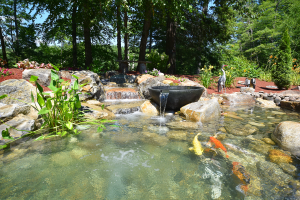
When torrential rain or general disturbance causes cloudiness in a pond, a well-designed wetland filter clears it up in just a few hours. We've built ponds that are four feet deep where the water stays so clear you can see every detail on the bottom. That's the power of working with nature instead of against it.
Dramatically Reduced Maintenance
Once established, a wetland filter is largely self-sustaining. The beneficial bacteria, plants, and microorganisms regulate themselves. You're not cleaning filter pads every week. You're not backflushing sand filters that keep clogging. You're not dumping chemicals and hoping for the best.
Most wetland systems need a simple cleanout once a year—and even that's quick and easy with proper design.
No Chemicals Required
This is a big one for many of our clients. With wetland filtration, you're not adding chlorine, algaecides, or any other chemical treatments to your water. That means healthier fish, healthier plants, and a healthier environment for wildlife.
If you have a natural swimming pond, this is especially important. Chemical-free water means no skin irritation, no eye burning, and no harsh smells—just soft, naturally purified water that's gentle on everyone who uses it.
Natural Beauty
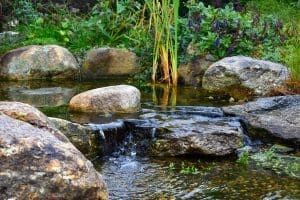
A wetland filter doesn't look like a piece of equipment—it looks like part of your landscape. Lush aquatic plants, natural stone, flowing water... it integrates seamlessly into your outdoor space and often becomes one of the most beautiful features of your entire property.
Environmental Stewardship
Here's something we're passionate about: natural wetlands are among the most biologically diverse habitats on Earth. But development, construction, and changes to natural water flow have put tremendous stress on these ecosystems.
When you add a constructed wetland to your backyard, you're creating a small island of biodiversity in your community. Birds, butterflies, dragonflies, frogs—they'll all find their way to your water feature. You're not just building a pond; you're contributing to the ecological health of your neighborhood.
What Features Benefit from Wetland Filtration?
While wetland filtration is absolutely essential for natural swimming ponds, it's a game-changer for many other water features as well.
Natural Swimming Ponds
If you want to swim in chemical-free water, wetland filtration isn't optional—it's required. Swimming ponds demand consistently clear, safe water for human contact. A properly sized wetland filter (typically 30-50% of your total water feature area) provides the biological filtration capacity to keep swimming water pristine throughout the season.
Large Koi Ponds
Koi produce a significant amount of waste, and that waste creates nutrients that feed algae. Standard filtration systems like a biofalls can handle smaller koi ponds, but larger ponds with heavy fish loads often need the extra filtration capacity that only a wetland can provide.
The result? Crystal-clear water that showcases your beautiful koi, rather than hiding them behind a green haze.
Ecosystem Ponds
Even if you don't have a heavy fish load, larger ecosystem ponds benefit tremendously from wetland filtration. The additional biological filtration capacity means less maintenance, better water quality, and a more balanced ecosystem overall.
Large Natural Ponds and Farm Ponds
If you have a natural pond or farm pond struggling with algae, a constructed wetland can be a transformative solution. Unlike chemical treatments that provide temporary fixes, wetland filtration addresses the root cause of algae problems by removing excess nutrients from the water.
And because wetland systems can be retrofitted to existing ponds—including earth-bottom ponds—you don't need to start from scratch to see dramatic improvements. Our natural pond and lake aeration services often work hand-in-hand with wetland filtration for large water bodies.
Ponds with High Nutrient Loads
Does your property have significant runoff from lawns, gardens, or other landscaped areas? That runoff carries fertilizers and nutrients straight into your pond, feeding algae and disrupting water quality. A wetland filter acts as a buffer, processing those nutrients before they can cause problems.
The Components of a Modern Wetland Filter
At New England Aquatic Landscaping, we're proud to be recognized as Aquascape's Regional CAC of the Year 2025. We use Aquascape's proven wetland filtration components, which have been refined over decades of real-world use.
Here's what goes into a professional wetland installation:
Snorkel Vault: This is the access point for maintenance. It sits at the center of the wetland and allows you to easily remove any sediment that accumulates at the bottom—typically once a year.
Centipede Module: Positioned at the bottom of the wetland, the centipede module distributes incoming water evenly across the entire filter bed. This even distribution is critical for proper filtration.
FilterBlox/AquaBlox: These create the sedimentation chamber where heavier particles settle out before water moves up through the gravel layers.
Layered Gravel: Multiple sizes of gravel—large at the bottom, medium in the middle, small at the top—provide surface area for bacterial colonization and mechanical filtration.
Aquatic Plants: Carefully selected marginal plants complete the filtration process while adding natural beauty to your landscape.
Pump and Plumbing: Properly sized pumps ensure adequate water flow through the system, while quality plumbing ensures reliable operation for years to come.
Wetland Filtration in the New England Climate
One question we get frequently: "Will this work in Massachusetts winters?"
Absolutely. In fact, wetland filtration is particularly well-suited to our New England climate.
During winter, the system essentially hibernates. The bacterial colonies become dormant but don't die off—they're ready to reactivate as soon as temperatures rise in spring. The plants die back (though many hardy marginals will return year after year), and the pond beneath may freeze over, but the ecosystem remains intact.
There's no draining required, no winterization chemicals needed, and no complicated shutdown procedures. When spring arrives, the system wakes up and gets back to work. It's one of the many ways wetland filtration makes pond ownership simpler and more enjoyable.
For plant selection, we focus on hardy marginals that thrive in our growing zone: native iris, cattails, pickerel rush, and other species that return reliably year after year. We may also incorporate tropical plants during the growing season, which add beauty and filtration capacity even though they won't survive the winter.
Is Wetland Filtration Right for Your Water Feature?
Wetland filtration is an excellent choice for many water features, but it's not the only option—and for smaller ponds, it may not be necessary. Here are some factors to consider:
You might benefit from wetland filtration if:
- You have persistent algae problems despite chemical treatments
- Your pond is larger than a few thousand gallons
- You have a heavy fish load (especially koi)
- You want a natural swimming pond
- You're tired of high-maintenance filtration systems
- You want to eliminate chemical treatments entirely
- Your property has high nutrient runoff from lawns or gardens
- You value the environmental benefits of creating wetland habitat
A standard ecosystem filtration system might be sufficient if:
- Your pond is smaller and doesn't have a heavy fish load
- You're comfortable with occasional algae management
- Space is limited and you can't accommodate a wetland area
Not sure which approach is right for you? That's exactly what consultations are for. We're happy to visit your property, assess your specific situation, and recommend the filtration approach that makes the most sense for your goals and budget.
Ready to Learn More?
If you've been struggling with pond water quality, or if you're dreaming of a new water feature that stays crystal clear with minimal effort, wetland filtration might be exactly what you're looking for.
At New England Aquatic Landscaping, we've built hundreds of water features across Massachusetts, Rhode Island, Connecticut, and New Hampshire. We understand the unique challenges of our New England climate, and we know how to design wetland systems that thrive year-round.
We'd love to talk with you about your vision—whether that's solving a problem with an existing pond, building a new pond with superior filtration, or creating the natural swimming pond you've always dreamed of.
Ready to take the next step?
- Not sure what type of water feature is right for you? Take our Water Feature Discovery Quiz
- Have questions about your existing pond? Learn about our Exploratory Drain & Clean service
- Ready to start a conversation? Contact us or call us at (774) 437-1160
New England Aquatic Landscaping has been creating backyard water features and changing lives through the healing power of water since 2007. We're a family-owned business proudly serving Middlesex, Norfolk, Suffolk, Worcester, Plymouth, and Essex Counties in Massachusetts, plus parts of Rhode Island, Connecticut, and New Hampshire.