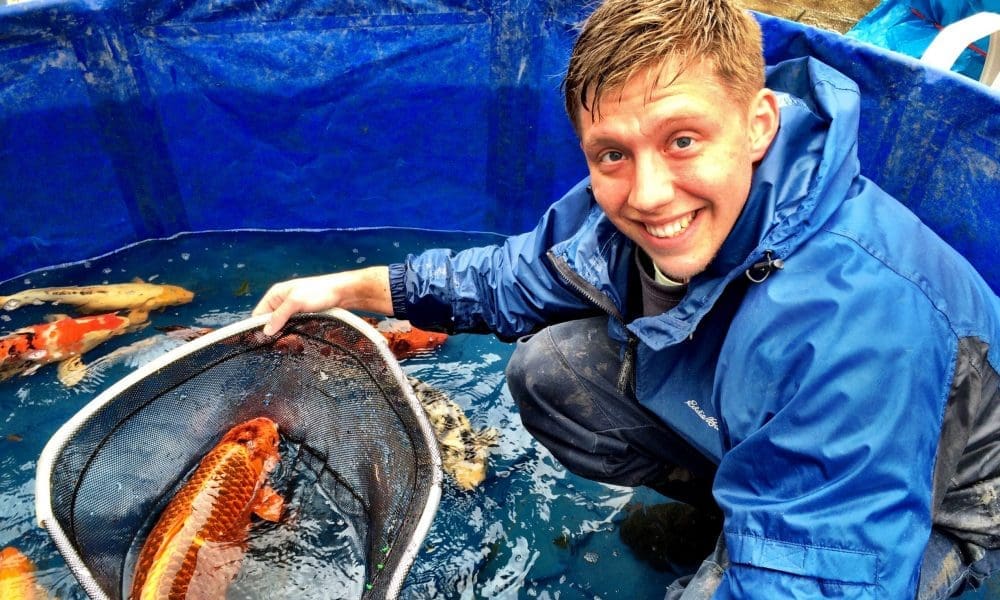
Every spring, we hear from pond owners who watched their fish slowly make their way back up from the bottom and felt that pull to start feeding again. It is one of the best parts of having a pond — that moment when your koi or goldfish come back to life after winter. We completely understand the excitement.
But the honest answer to "when should I start feeding my fish?" is not about the calendar. It is about your thermometer.
The Rule That Protects Your Fish: 50 Degrees Water Temperature
Koi and goldfish are cold-blooded animals. Their metabolism does not run on a schedule — it runs on water temperature. When the water is cold, their digestive system slows to a crawl. When it is warm, everything speeds back up.
Below 50 degrees water temperature, a fish's gut is not moving fast enough to process food properly. Undigested food can rot inside the fish and cause serious internal problems — or simply sink to the pond floor and spike your ammonia levels before the season even starts.
The 50-degree water temperature threshold is the industry standard, and it is correct. But here in New England, where spring water temperatures swing up and down from week to week, I always tell our clients to wait until they are seeing 55 degrees consistently — several days in a row, not just one warm afternoon. That extra cushion protects your fish from the fluctuations that are completely normal in our region. It is not that 50 is wrong. It is that 55 gives you confidence the warmth is here to stay.
Pick up an inexpensive pond thermometer if you do not already have one. Take readings in the morning, when water temperatures are at their lowest point of the day. You want to see consistent readings above 50 degrees — not a warm afternoon spike — before you offer any food at all.
In Massachusetts, Rhode Island, Connecticut, and New Hampshire, that consistent threshold typically arrives sometime between late March and mid-April, depending on the year. Some years it comes earlier. Some years it lingers. The thermometer will tell you the truth when the calendar cannot.
Why Are My Fish at the Surface — Is It Really Hunger?
This is worth slowing down on, because the answer is not always yes.
Fish congregating near the water's surface in cool weather can mean one of two things: they are hungry, or they are struggling with low dissolved oxygen. Cold water actually holds more oxygen than warm water, but if your waterfall was shut off over winter or your aerator was not running, surface agitation may have been limited — and fish will come up looking for the best-oxygenated water they can find.
Before feeding, confirm your pump is running and your waterfall or aerator is circulating water properly. If fish are gasping or moving lethargically, low oxygen is likely the issue — not hunger. Get the water moving first, then reassess.
If your system is running well and water temps are consistently above 50 degrees, then yes — those fish are probably just glad to see you.
Start With Cold Water Food, Not Your Regular Pellets
The food you feed in the cold-weather window matters as much as the timing. This is not the moment to toss in the same high-protein color-enhancing pellets you use in July.
We carry and recommend Aquascape Cold Water Fish Food Pellets for the transition period between dormancy and full active season. They are formulated with wheat germ as the primary ingredient — a soft, easily digestible carbohydrate that a slow-moving digestive system can actually handle. They also include Spirulina and Bacillus Subtilis, which supports gut health as fish wake back up.
Think of it as a light, easy-to-digest meal after a long fast. You would not wake up from months of limited eating and immediately sit down to a heavy protein-packed dinner. Your fish are the same way.
You can find our cold water food in the NEAL pond store alongside the rest of our Aquascape fish care products.
How Much and How Often
Here is a simple feeding guide by water temperature:
| Water Temperature | Frequency | Amount | Food Type |
|---|---|---|---|
| Below 50 degrees F | Do not feed | None | N/A |
| 50 to 59 degrees F | Once daily | 3 to 5 min window | Cold Water Formula |
| 60 to 68 degrees F | Once or twice daily | 3 to 5 min window | Transition to regular food |
| Above 68 degrees F | Two to three times daily | 3 to 5 min window | Regular season food |
The "3 to 5 minute window" rule is simple: offer a small amount of food and watch your fish eat. Whatever is left floating or sinking after five minutes gets removed with a net. Every time. This is one of the most important habits a pond owner can build, because uneaten food is the fastest way to dirty your water and throw off your pond's biological balance.
Transitioning to Regular Season Food
Once your water consistently holds above 60 degrees Fahrenheit, your fish's metabolism has picked back up enough to handle more nutritionally complex food. This is when you can begin mixing in your regular season pellets — or switch over fully to something like Aquascape Premium Color Enhancing Fish Food Pellets, which include Spirulina, Krill meal, and Astaxanthin to bring out the best color in your koi and goldfish during the warm months.
There is no need to rush that transition. If water temperatures are bouncing between 55 and 65 from one day to the next — which is completely normal here in New England in spring — stay on cold water formula until things stabilize. Your fish will tell you they are ready by becoming more active, more responsive, and more consistently hungry.
A Note on New England Timing
We want to set realistic expectations: spring in our region can be unpredictable. A warm week in March can be followed by a cold snap that sends water temps back down into the 40s. That is normal, and your fish handle it just fine — they have been doing it for millions of years.
What does not serve them is inconsistent feeding during those fluctuations. If water temps dip back below 50 after you have started feeding, just stop for a few days until things warm back up. No drama required. Resume feeding when the thermometer says it is time again.
If you are ever unsure about your pond's readiness, water quality, or fish health coming out of winter, that is exactly the kind of thing our maintenance team can assess during a spring opening visit. It is always easier to start the season right than to troubleshoot problems that built up over winter.
Ready to Open Your Pond for the Season?
We offer spring pond opening services throughout Massachusetts, Rhode Island, Connecticut, and New Hampshire. Let our team get your water quality, equipment, and fish care off to the right start.
Schedule a Spring OpeningFrequently Asked Questions
The industry standard threshold, established by Aquascape, is 50 degrees Fahrenheit water temperature. Once your pond water is consistently holding above that mark, a koi or goldfish's digestive system is ready to process food properly. Below 50 degrees water temperature, undigested food breaks down in the water, spikes ammonia levels, and stresses your fish. Consistent is the key word — you want several days above 50, not just one warm afternoon.
Not always hunger. Fish gathering near the surface in cool water can signal low dissolved oxygen — especially if your waterfall or aerator has been off over winter. Check that your pump is running and water is circulating well before assuming they need food. If everything looks good and water temps are consistently above 50 degrees, then yes, they may simply be looking for a meal.
Start with a cold water formula — Aquascape Cold Water Fish Food Pellets are what we recommend. They are made with wheat germ, which is easier for fish to break down when metabolism is still running slow. Once your water is consistently above 60 degrees Fahrenheit, you can transition to a regular season food like Aquascape Premium Color Enhancing Pellets.
Once daily is plenty when water is between 50 and 60 degrees Fahrenheit. Offer only what your fish can finish in about three to five minutes, then stop. Remove any uneaten food with a net. As the water warms and fish become more active, you can work up to two small feedings per day.
Yes, the same temperature guidelines apply to both. Goldfish are generally a little hardier and may seem more eager to eat sooner, but their digestive systems respond to water temperature the same way. Follow the 50-degree rule for both species.