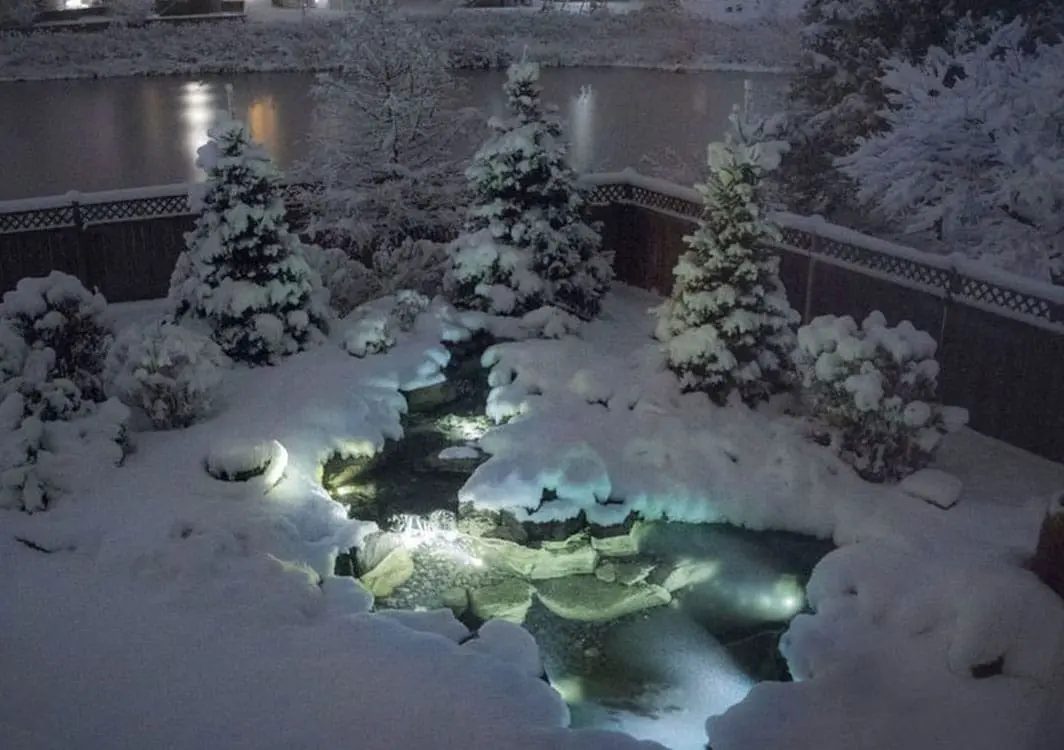
A frozen pond looks like it has gone to sleep. It has not. Under the ice, leaves, fish waste, and sludge keep breaking down all winter, and what that breakdown leaves behind decides what your water looks like in April. Cold water beneficial bacteria are one of the simplest ways to tip that process in your favor.
What Really Happens Under the Ice
Organic debris does not stop decaying when the water gets cold. It slows down, but it keeps going through December, January, and February, even under a sheet of ice and a foot of snow.
That decay produces ammonia and gases, and it builds sludge on the bottom and inside your gravel. In summer, an active population of beneficial bacteria handles this waste quickly. In winter, the usual workforce has clocked out, and the waste piles up.
Your fish are living in that water the whole time. They are in a slow, low-energy state, but they still need oxygen and still respond to rising ammonia. A pond that went into winter loaded with leaves can come out of it with stressed fish, foul-smelling muck, and an algae bloom the first sunny week of spring.
Why Warm-Weather Bacteria Stop Working
Most of the bacteria in your filters and on your rocks are warm-water strains. They are extremely effective when water is comfortable, and they slow sharply as temperatures fall through the 50s and into the 40s. Products sold for summer use work on the same principle, so dosing them in November does very little.
Cold water bacteria are different strains selected to stay active at low temperatures. They will not work as fast as summer bacteria do in July, but they keep working when everything else has gone quiet. That steady, low-level activity is what matters over a long New England winter.
What cold water bacteria do for your pond
- Reduce toxic ammonia building up under the ice.
- Protect fish during their winter dormancy.
- Limit the heavy sludge and muck that greets you in spring.
- Keep the ecosystem in balance through the coldest months.
- Lead to cleaner, clearer water when the pond wakes up.
Think of it as keeping a small maintenance crew on duty while the rest of the system rests. The payoff shows up in spring: less muck to remove, steadier water chemistry as fish start moving again, and a filter that is not buried under a winter's worth of waste on the first warm day.
Bacteria Work Best When Leaves Stay Out
Cold water bacteria are a support tool, not a substitute for keeping debris out of the pond. Every pound of leaves you keep out is a pound the bacteria never have to deal with.
In a typical New England yard, trees can drop hundreds of pounds of organic material into a pond each fall. Once those leaves sink, they settle into your gravel shelves and rot into a foul black sludge. That trapped decay releases gases under the winter ice, puts fish at risk all season, and almost guarantees a tough cleanout when the ice melts. Even in the fall, before ice forms, leaves on the bottom pull oxygen from the water and leave your koi working harder to breathe.
Net before the trees drop
The best time to net is before peak leaf drop, not after the first leaves are already floating. A tight, elevated dome net works far better than a flat net laid on the water. Instead of sagging into the pond, it sheds leaves. They land on top, dry in the breeze, and blow off onto the lawn while the waterfall keeps running underneath.
A well-built net can also be close to invisible from a distance. Our guide to pond netting covers the options in more detail.
Pro tip: Do the heavy lifting in fall and let bacteria handle what is left. Net early, clear out any leaves that slipped through before ice forms, then add cold water bacteria so the small amount of debris that remains breaks down instead of turning into sludge.
Keep One Hole in the Ice (and Only One)
Decomposition under the ice produces gases that need a way out. If your pond has fish and freezes over completely, those gases are trapped against the water. That is why a fish pond needs one opening in the ice all winter, usually kept open by a floating de-icer or an aerator.
One hole is enough. Do not break up the rest of the ice. Smashing ice stresses fish with shock waves, and it removes the natural insulation the ice provides. The exposed water refreezes, ice builds up thicker, and you can end up losing more water and refilling more often than you would have otherwise.
If you want the full reasoning, read why you should not break up the ice in winter.
Timing, Plumbing, and the Pump Mistake
Bacteria and netting handle the biology. Shutdown handles the hardware. Both need to happen on time.
Why timing matters
Shut down too early and you lose weeks of the best fall evenings by the water. Wait too long and an early cold snap can freeze water inside lines and equipment before you are ready. We once shut down a pond early for a family who was traveling overseas, and the plan had to cover netting, fish, equipment, and waterfalls all at once so nothing was left to chance while they were away.
The hidden danger inside plumbing lines
Water left sitting in shallow pipes, check valves, and fittings expands when it freezes. That can crack pipe or fittings where you cannot see them, and the damage often does not show up until spring startup, when the waterfall suddenly loses water. Lines that will not run through the winter should be drained so there is nothing left in them to freeze.
New England adds its own challenge. Freeze-thaw cycles can happen several times in a single month, so a line that survives one cold night is not safe for the season.
The single mistake that ruins pumps
The most common winter pump mistake is leaving a pump where it can freeze, sitting in a shallow skimmer or line that ices over, or simply left in standing water with no plan. A pump that freezes solid is often a pump that has to be replaced in spring.
The second mistake is running a pump in a way that pulls cold surface water down through the deep zone where fish rest. In winter, the warmest water in a pond is at the bottom. Fish depend on that stable layer, and circulation that mixes it with icy surface water can chill the whole pond. If a pond runs through winter, the setup needs to keep the deep water undisturbed.
A Simple Winter Prep Checklist
- Install netting before peak leaf drop.
- Remove leaves and debris that got past the net before ice forms.
- Add cold water beneficial bacteria as the water cools.
- Stop feeding fish as the water gets cold, and do not resume until it holds a consistent 55°F in spring.
- Drain plumbing lines and protect or remove pumps that will not run all winter.
- Set up a de-icer or aerator to keep one hole open in the ice.
- Leave the rest of the ice alone.
For more on keeping fish healthy through the cold months, see our winter pond and fish care tips. If you would rather hand the whole job to a crew, our maintenance service handles fall netting, shutdowns, and spring startups.
Watch: more from the crew on this topic.
Frequently Asked Questions
What is cold water beneficial bacteria?
Cold water beneficial bacteria are bacterial strains selected to stay active at low water temperatures. Standard pond bacteria slow down sharply as water cools, but cold water strains keep breaking down organic waste through late fall and winter. That helps reduce ammonia under the ice, protects resting fish, and limits the sludge that builds up before spring.
When should I add cold water bacteria to my pond?
Add it as the water cools in late fall, after you have removed leaves and debris and before the pond freezes over. Follow the product directions for dosing. It works best as part of a full winter routine that includes netting, a clean pond going into winter, and one opening in the ice for gas exchange.
Can I just use my regular pond bacteria in winter?
Not effectively. Regular pond bacteria are warm-water strains that do most of their work in late spring and summer. As water temperatures drop, their activity slows to the point where they do very little. Cold water strains are designed to fill that gap, so they are the better choice once the season turns.
Why should I only keep one hole open in the ice?
One opening is enough to let gases from decomposition escape. Breaking up additional ice removes the insulating layer, exposes more water to freezing air, and causes thicker ice to build up. It can also stress fish and increase water loss, which means more refills. Keep one hole open with a de-icer or aerator and leave the rest alone.
Does netting matter if I use cold water bacteria?
Yes. Netting keeps the bulk of fall leaves out of the water, which is far more effective than trying to digest them later. Bacteria are best at handling the smaller amount of debris that remains. Without a net, leaves rot in the gravel, create black sludge and trapped gases under ice, and usually lead to a heavy spring cleanout.
Talk to New England Aquatic Landscaping
If you want your pond protected this winter and clear when it wakes up, we can help with netting, shutdown, and a cold-weather plan for your fish. Reach out through our contact page or call (774) 437-1160 to get on the schedule before the leaves come down.