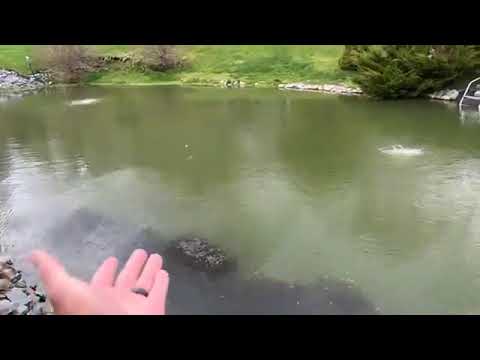
A natural swimming pond can run for years on light seasonal care. Skip the deeper maintenance long enough, though, and problems build quietly under the gravel where nobody sees them. We have deep cleaned a swim pond that went nearly two decades without one. Here is what that work involves, what it looks like when fish are part of the problem, and how to make sure your pond never needs it.
Signs a Swim Pond Needs More Than Routine Care
- Water that has gone murky and stays that way, even after a cleanout of the swim zone.
- Algae growing faster than the plants can keep up with.
- Fish that seem stressed, or a fish population that has clearly outgrown the pond.
- Debris and sediment built up in the gravel of the regeneration zone.
- Waterfalls and streams running weaker than they used to.
If the water level is dropping too, that is a separate question. Our guide to evaporation vs a leak walks through how to tell the difference.
How Sediment Builds Up in the Wetland
The regeneration zone is a bed of gravel planted with aquatic plants. Water moves slowly through it, and as it does, beneficial bacteria break down organic waste and plant roots pull dissolved nutrients out of the water. Over time, fine sediment settles to the bottom of that gravel bed. Our guide to wetland filtration explains the process in more detail.
Most professional wetland filters have a snorkel, a vertical pipe that reaches down into the gravel for cleanouts. It is easy to forget because it sits out of sight. Once a year, a pump should go down the snorkel to flush out that settled sediment. Skip it long enough and the sediment can actually harden, which makes it far harder to clean.
A 33,000-gallon recreation pond we serviced is a good example, and you can see it in our {a('https://www.youtube.com/watch?v=NGp3lNnRYWM', 'tour video')}. It is a beautiful pond, 8 feet deep with a massive jumping rock and a beach entry, and its wetland filter is the proof that a big body of swimming water can stay clean without chemicals. It had also gone nearly two decades without a deep clean, and our crew had to move literal piles of debris just to find the gravel again.
When Fish Are the Problem
Swim ponds are designed for people, with a light fish load or none at all. A few fish add life and help with insects. Koi, though, reproduce, and a swim pond that slowly fills with them tips out of balance:
- Murky water that ruins the view and makes swimming unappealing.
- Excess waste that feeds algae faster than the plants can keep up.
- Stressed fish struggling in water that cannot support them.
Fixing an overcrowded swim pond means draining it, cleaning and power-washing the system, sorting the fish and resetting the ecosystem. If you want fish in a swim pond, plan to manage their numbers over time.
What a Full Restoration Looks Like
When people hear pond cleaning, they picture a hose and a net. A full swim pond restoration is a different operation. On one recreational swim pond, it meant 6,000-gallon holding tanks, large pumps and hundreds of koi carefully counted and relocated while the systems were flushed.
From the first minute on site, water was moving: tanks filling, fish being counted, systems being flushed. Every step was intentional, to protect water quality and balance nutrients. When the waterfalls kicked back on, the change was immediate.
Watch: how we clean a 15,000-gallon swim pond.
If fish are going back into the pond, the refill matters too. Municipal water carries chlorine or chloramine, and our article on tap water and pond fish explains why that needs to be handled before fish return.
Restore or Rebuild?
An old swim pond that looks rough is often a cleaning and rebalancing job, not a rebuild. Often the stone, liner and wetland are still sound under the debris. When the liner, plumbing or structure itself has failed, that becomes a repair or renovation project instead, and we will tell you which one you are looking at after we see it.
Keeping It From Happening Again
- Flush the wetland snorkel once a year.
- Keep fall leaves out with skimming and netting, and clear debris from the wetland.
- Keep the fish population modest, or skip fish altogether.
- Schedule a professional deep clean every few years, depending on leaf load and fish population. Our maintenance service can put it on a planned schedule. For a neglected pond you did not build, our exploratory drain and clean service drains it, cleans it and inspects every component.
A little maintenance every year saves a massive amount of labor later. For a sense of what professional cleanouts cost in general, see our pond cleaning cost page.
Frequently Asked Questions
How often should a natural swimming pond be deep cleaned?
Every few years, depending on how many leaves fall into the pond and how many fish live in it. On top of that, the wetland snorkel should be flushed once a year so sediment does not settle and harden in the gravel bed.
What is a wetland snorkel?
Most professional wetland filters have a snorkel, a vertical pipe that reaches down into the gravel bed for cleanouts. Once a year, a pump is dropped down the snorkel to flush out the sediment that has settled at the bottom of the wetland.
Can you restore a swim pond that has not been cleaned in years?
Yes, but it takes far more labor. We deep cleaned a 33,000-gallon recreation pond that had gone nearly two decades without a deep clean; the crew had to move piles of debris just to find the gravel again. Hardened sediment is many times harder to remove than a yearly flush.
Do the fish have to come out during a swim pond cleanout?
In a full restoration, fish are usually counted and moved to holding tanks while the pond and its systems are flushed, then returned once the water is ready. On one swim pond restoration, that meant 6,000-gallon holding tanks and hundreds of koi.
Talk to New England Aquatic Landscaping
Whether your swim pond needs a full restoration or just a better maintenance plan, we can help. Learn more on our natural swimming ponds page, read how natural swimming ponds work in New England, or reach out through our contact page or at (774) 437-1160.