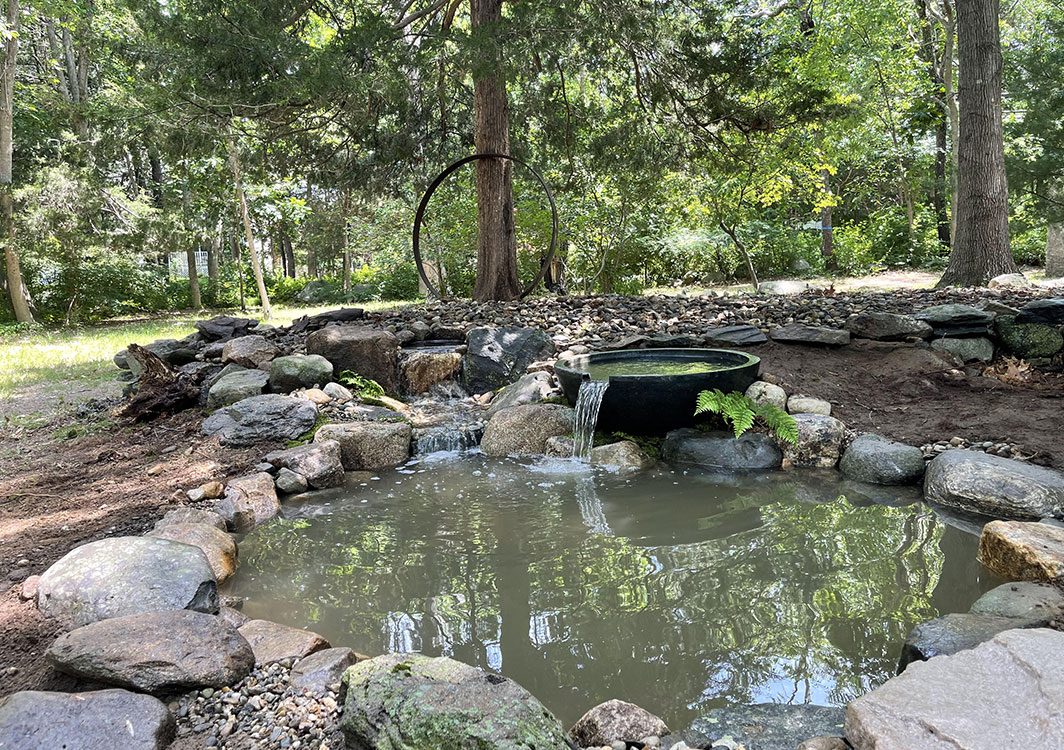
Most people think of a pond as something you sit beside. A natural swimming pond is something you step into. It looks like a spring-fed swimming hole you might stumble on during a hike, yet it is a carefully engineered system that keeps the water clear without chlorine. Here is how these ponds work, how they are laid out, and what owning one really involves in our climate.
What a Natural Swimming Pond Is (and Is Not)
A natural swimming pond, sometimes called a recreation pond, is a lined body of water designed for people first. It has a dedicated swim zone, a comfortable way in and out, and a biological filtration system that does the cleaning a chlorinator does in a pool.
It is not a pool with rocks around it. There is no sanitizer, no plaster, and no weekly chemical balancing. The water is alive, and it stays clear because the system is built to keep nutrients in check.
It is also not a koi pond you happen to swim in. A koi pond is designed around fish load, with heavy filtration sized for waste. A swim pond is designed around people, with a light fish load or none at all.
How the Wetland Filter Keeps the Water Clean
The heart of a swim pond is the wetland filter. Water is pulled from the swim zone and pushed up through a bed of gravel planted with aquatic plants. As it moves slowly through that gravel, two things happen.
- Beneficial bacteria colonize every stone and break down organic waste, converting ammonia into less harmful compounds.
- Plant roots pull dissolved nutrients out of the water, starving algae of the food it needs to bloom.
The cleaned water then returns to the swim area, often over a waterfall or a rock spillway that adds oxygen on the way back. If you want the deeper science behind this process, our guide to wetland filtration walks through it step by step.
On a recent Rhode Island build, the wetland filter sits quietly behind the scenes while the homeowners see only boulders, plants, and clear water. On a 33,000-gallon recreation pond we serviced, the wetland filter was the proof that a big body of swimming water can stay clean without chemicals.
Depth Zones: Designing for Plants and People
Good swim ponds are built in zones. Each one does a specific job.
Shallow planting shelves
Around the edges, shallow pockets hold plants that soften the look and add another layer of nutrient uptake. These shelves also keep the outer edges from feeling like a sudden drop-off.
The swim zone
The swim zone is open water, kept free of plants so you have room to move. On the 15 by 20 foot Rhode Island pond, the swim zone is 4 feet deep, which is enough to float, cool off, and swim a few easy strokes without feeling like you are in a lap pool.
Deep water
Larger recreation ponds can go much deeper. The 33,000-gallon pond mentioned above reaches 8 feet, deep enough that a large jumping rock becomes the main attraction.
Beach Entries and Jumping Rocks
How you get into the water matters as much as the water itself. A gently sloped beach entry lets kids wade in, gives adults a place to sit in the shallows, and makes the pond feel like a lakefront rather than a hole in the yard.
Both of the projects above use a beach entry. Paired with massive natural boulders, it makes the pond feel like it has always been there.
A jumping rock is the opposite experience. It needs real depth beneath it, a solid base, and stone set so it will never shift. One recreation pond we toured was so clear and inviting that Shawn Cutroni jumped right in.
Can You Keep Fish in a Swim Pond?
You can, but you have to be honest about numbers. A few fish help with insects and add life to the water. Too many fish turn a swim pond into an overloaded koi pond.
We have seen what happens when a swimming pond becomes overcrowded with koi. The balance tips quickly:
- Murky water that ruins the view and makes swimming unappealing.
- Excess waste that feeds algae faster than the plants can keep up.
- Stressed fish struggling in water that cannot support them.
Fixing it meant draining the pond, cleaning and power-washing the system, sorting the fish, and resetting the whole ecosystem. If you want fish in a swim pond, plan to manage their numbers over time.
The Maintenance Reality
A natural swimming pond is far lower maintenance than a chlorinated pool, but it is not zero maintenance. The good news is that the important tasks are simple and predictable.
Flush the snorkel every year
Most professional wetland filters have a snorkel, a vertical pipe that reaches down into the gravel bed for cleanouts. It is easy to forget because it sits out of sight.
Pro tip: Once a year, drop a pump down the snorkel and flush out the sediment that has settled in the bottom of the wetland.
Skip it long enough and the sediment can actually harden. The 33,000-gallon pond had not had a deep clean in nearly two decades, and the crew had to move literal piles of debris just to find the gravel again. Hardened sediment is many times harder to clean than a yearly flush.
Plan a periodic deep clean
Every few years, depending on leaf load and fish population, a swim pond benefits from a full professional cleanout. On a large recreation pond, that is a serious operation. One swim pond restoration involved 6,000-gallon holding tanks, large pumps, and hundreds of koi carefully counted and relocated while the systems were flushed. When the waterfalls kicked back on, the change was immediate. Our maintenance service can put deep cleans on a planned schedule.
Manage leaves in fall
New England oaks and maples can drop a heavy load of leaves into open water. Anything that sinks becomes nutrients for algae next summer. Skimming, netting, and keeping the wetland clear of debris all help the system stay ahead.
Swim Ponds Through a New England Year
Our swimming season is short, so a swim pond has to earn its place in the landscape the rest of the year too. The good ones do. With boulders, plants, and a waterfall, the pond looks like a natural feature in April and October, not a covered pool waiting for June.
In winter, a swim pond is not drained or covered like a pool. The liner, stone, and gravel are built to handle freeze, thaw cycles. Plants die back and regrow in spring. Depending on the design, circulation may be shut down for the season, with an opening kept in the ice so gases can escape if fish are present.
Spring startup usually means a cleanout of the swim zone, a check of pumps and plumbing, and giving the wetland a few weeks to wake up as water temperatures climb. By the first hot weekend, the water is ready.
What Does a Natural Swimming Pond Cost?
Cost varies widely with size, depth, site access, and how much stone and filtration the design needs. As a general frame of reference, plan on an investment comparable to a quality in-ground pool project. The difference is what you get: a feature that looks beautiful twelve months a year and does not depend on chemicals.
To see how these projects come together, visit our natural swimming ponds page or browse the swim pond learning center.
Watch: more from the crew on this topic.
Frequently Asked Questions
Is a natural swimming pond clean enough to swim in?
Yes. A properly built swim pond uses a wetland filter where gravel, beneficial bacteria, and plant roots remove waste and nutrients from the water. The water is circulated through that filter continuously during the season. The result is clear, living water without chlorine. Clarity depends on proper sizing, a light fish load, and basic yearly maintenance such as flushing the wetland snorkel.
How deep should a natural swimming pond be?
It depends on how you want to use it. A swim zone around 4 feet deep works well for floating, cooling off, and easy swimming, as on a 15 by 20 foot pond we built in Rhode Island. Larger recreation ponds can reach 8 feet, which allows a jumping rock. Shallow planted shelves around the edges handle filtration and soften the transition.
Can I keep koi in my swimming pond?
A small number of fish is fine, but swim ponds are designed for people, not heavy fish loads. Koi reproduce, and an overcrowded pond quickly develops murky water, excess waste, algae, and stressed fish. If you want koi, keep the population modest and plan to thin it over time. Serious koi keepers are usually happier with a dedicated koi pond.
What maintenance does a natural swimming pond need?
The key yearly task is flushing the wetland filter snorkel with a pump so sediment does not harden. Beyond that, plan for fall leaf control, a spring startup, and a full professional deep clean every few years. Ponds that skip maintenance for many years can require major labor to restore, because hardened sediment is far harder to remove than soft debris.
Do you have to close a swim pond for the winter?
You do not drain or cover it like a pool. The liner, stone, and gravel are built to handle New England freeze, thaw cycles, and plants simply go dormant. Circulation may be shut down for the season depending on the design. If fish live in the pond, an opening in the ice should be maintained so gases can escape.
Talk to New England Aquatic Landscaping
If you have been picturing a swimming hole in your own backyard, we would be glad to walk your property and talk through size, depth, and filtration. Reach out through our contact page or call (774) 437-1160 to get started.