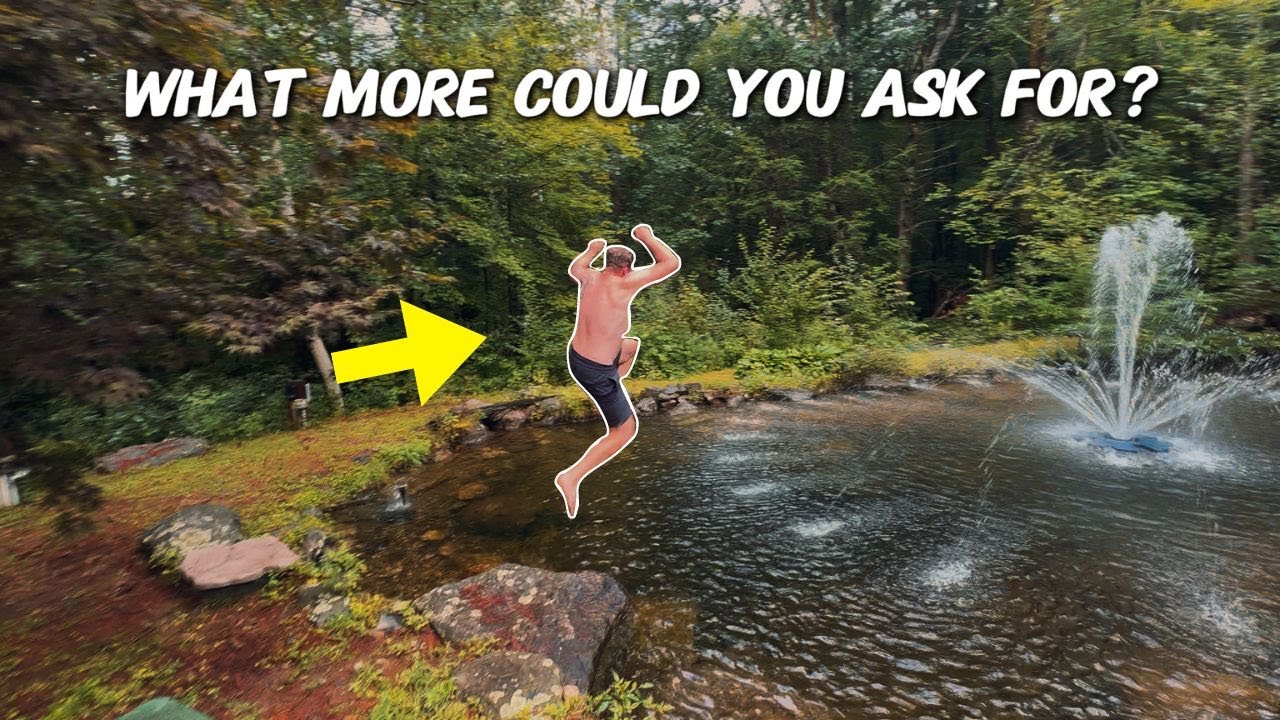
Not every property can host a natural swimming pond, and it is much better to find that out on day one than after design. These are the things Shawn Cutroni looks at when he walks a yard for a swim pond, and why each one matters.
Room for Two Zones
Every natural swimming pond has two parts that share the same water: the swim zone, which is open water kept free of plants, and the regeneration zone, a planted gravel wetland that cleans it. The regeneration zone has to be sized for the water volume and for how heavily the pond will be used. It is the biological engine of the system, and it cannot be undersized. Our guide to wetland filtration explains why.
For reference, our standard swim pond sizes range from a recreational pond about 18 by 25 feet and 3 feet deep, to an average pond about 25 by 30 feet and 4 feet deep, up to a large pond about 30 by 40 feet and 5 feet deep. The layout also needs room for stone and plantings around the edge and a path for equipment during construction. That is why we see the most interest from larger lots in MetroWest, Greater Boston and the North Shore.
Sun
Sun is often the deciding factor. The wetland plants pull dissolved nutrients out of the water, and plants need light to do that work. A regeneration zone in heavy shade struggles, and when the plants cannot keep up, algae fills the gap.
At the Discovery Meeting, Shawn looks at where the sun falls through the day, not just at noon, and places the wetland where it gets the most light.
Trees and Leaves
New England oaks and maples can drop a heavy load of leaves into open water. Anything that sinks becomes nutrients for algae the following summer. Trees overhanging the water also add shade. A pond can absolutely sit near trees, but placement matters, and so does a plan for fall: a good skimmer, seasonal netting and keeping the wetland clear of debris.
Slope and Grade
A sloped yard is not automatically a problem. Grade affects how much digging is needed and where water drains during storms, but it can also be an asset. Cleaned water often returns to the swim zone over a waterfall or a rock spillway, which adds oxygen on the way back, and a natural grade change is a good place for it. On a hillside waterfall project in Shrewsbury, the slope became the feature, and the same thinking applies to a swim pond.
Soil, Ledge and Drainage
What is under the lawn matters. Ledge slows excavation. Clay holds water against the liner after heavy rain, so drainage around the basin has to be planned before digging starts. Neither one rules a project out, but both affect the timeline and the budget. Our article on natural swimming pond cost explains how site conditions move the price.
Access for Equipment
Excavators, loads of stone and gravel all have to reach the dig area. We look at gates, fences, side yards, septic systems and anything else between the street and the spot you have in mind. Tight access does not always stop a project, but it changes how it gets built.
Permits
Permit requirements differ from town to town. We walk you through what your town asks for before any ground is broken, so there are no surprises once construction is scheduled.
How You Want to Use the Water
Before anything gets drawn, we talk about how you picture using the pond: laps, kids splashing, or a quiet soak at the end of the day. That shapes depth and layout. A swim zone around 4 feet deep is enough to float, cool off and swim a few easy strokes. Larger recreation ponds can reach 8 feet, deep enough for a jumping rock. A gently sloped beach entry lets kids wade in and gives adults a place to sit in the shallows. Our guide to how natural swimming ponds work covers these zones in more detail.
Timing
Most natural swimming ponds take 3 to 4 weeks to build. After construction, the biology needs time to establish, typically 4 to 8 weeks for the water to reach a stable balance, and the wetland plants keep maturing for a year or two. If a build finishes early enough in the season for the water to warm, you can often swim the same summer. Building in late summer or fall lets the plants root and settle so the pond is ready for the next swim season, which is part of why fall is a good time to build in New England.
What Happens at the Discovery Meeting
The intro phone call is free. The on-site Discovery Meeting is a paid, flat-fee visit, and the fee is applied toward your project when you move forward with us. It typically runs 60 to 90 minutes. Shawn reads the slope, sun and soil, listens to how you want to use the water, and gives you an honest answer about what your site can support. You get a written follow-up summary, and there is no obligation to hire us afterward.
Frequently Asked Questions
How much space do I need for a natural swimming pond?
Our smallest standard size is a recreational pond about 18 by 25 feet and 3 feet deep, and our largest standard size is about 30 by 40 feet and 5 feet deep. Beyond the water, the design has to fit a properly sized regeneration zone and leave a way for equipment to reach the dig. We see the most interest from larger lots in MetroWest, Greater Boston and the North Shore.
Can I build a natural swimming pond under trees?
Heavy shade is a problem. The regeneration zone relies on plants, and plants need light to pull nutrients out of the water. A site under mature trees also takes on more leaves, which become algae food if they sink. During the Discovery Meeting, Shawn looks at where the sun falls through the day and where leaves will drop, then places the wetland where it gets the most light.
Do I need a permit for a natural swimming pond?
Requirements differ from town to town. We walk you through what your town asks for before any ground is broken.
Can a natural swimming pond go on a sloped yard?
Often, yes. A slope affects excavation and drainage, but grade changes can also become the stream or waterfall that returns cleaned water to the swim zone. Shawn reads slope, sun and soil on site before designing anything.
Talk to New England Aquatic Landscaping
If you think your yard might be right for a swim pond, we would be glad to come see it. Read more on our natural swimming ponds page, or see our work in Lexington, Ipswich, Bedford, NH and West Hartford. Reach out through our contact page or call (774) 437-1160.