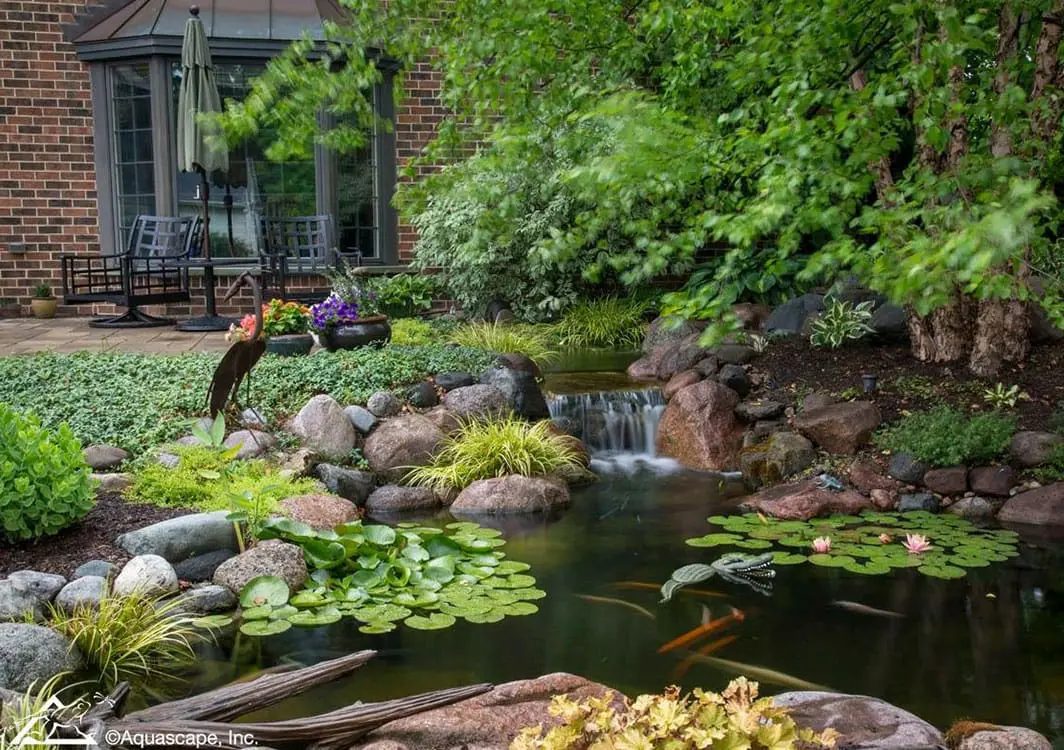
Most homeowners start thinking about a pond on the first warm weekend in April. By then, the best building window has already passed. In New England, fall is the season that gives you an easier build, healthier plants, and a water feature that is running the moment spring arrives.
The Ground Is on Your Side
Building a pond means moving soil, a lot of it. Excavators, skid steers, and tons of stone all cross your yard on the way to the dig site. When that happens in the heat of July, the lawn is already stressed from sun and drought, and every tire track shows.
In fall, soil is cooler and turf is more resilient. Grass that gets compressed or scuffed during construction has time to recover in mild weather instead of baking under August sun. You end up with less repair work around the finished feature and a yard that looks settled sooner.
Crews benefit too. Setting boulders and shaping streams is heavy, careful work. Cool mornings mean longer, steadier days and fewer heat breaks, which helps keep a project on schedule.
Plants Get a Head Start on Roots
A pond is only half finished when the water is running. The plantings around it, along the stream edges and in the shallow shelves, are what make it look like it belongs.
Perennials, shrubs, and marginal plants installed in fall settle in with far less heat stress than summer plantings. The air is cool but the soil is still warm, so plants put their energy into roots instead of struggling to keep leaves alive. By the time the ground freezes, they are anchored. When spring comes, they wake up and grow instead of spending the first half of the season recovering from transplant shock.
This is the same reason experienced gardeners plant trees and shrubs in September and October. Your pond landscape follows the same rules.
No Spring Waitlist
Spring is when everyone remembers they want a pond. It is also when every existing pond in New England needs to be opened, cleaned, and started up. Equipment that sat through freeze, thaw cycles needs to be evaluated, wetland filters need attention, and professional cleanings stack up quickly.
That rush means new construction competes for time with a full season of startups. If you call in April, your build may land in late spring or summer, and you lose a good part of the season waiting.
Build in fall and the situation flips. You wake up in spring with a fully operational, clear water feature that is ready on day one. While your neighbors are getting on a schedule, you are already sitting by the water.
Fall Is When You Actually Use the Water
There is a quieter reason fall works so well: it is one of the best seasons to enjoy a pond. Summer brings sticky humidity and swarms of bugs. Fall brings crisp nights, a fire pit, a sweater, and the sound of a waterfall without either.
A fall build means your very first weeks with the new feature are some of the most pleasant of the year. Add low-voltage lighting and those evenings get even better, because the water stays the center of the yard after dark.
Our outdoor seasons are short. A pond finished in October gives you a few weeks of fall evenings now and the whole of next spring and summer, instead of a feature that only comes online halfway through the year you meant to enjoy it.
What a Late-Season Build Really Looks Like
A fall build is not just a summer build on a cooler calendar. Late in the season, the order of work matters, and the crew has to plan around the weather.
The basin goes in before the frost
Last December our team broke ground on what was likely the final build of the year: a 32-foot pondless waterfall powered by 9,000 gallons per hour and anchored by more than 20 tons of hand-picked boulders. Temperatures were dropping fast and the ground was turning hard.
The first mission was simple and non-negotiable: get the basin excavated and installed before frost made digging impossible. Layout, elevations, flow math, and the reservoir all had to be settled up front so excavation could happen in that narrow window. Once the basin is in, rock work can continue through cold weather that would stop a dig.
Crews adapt to cold conditions
New England does not cooperate on a schedule. On that same project, a 100-foot section of plumbing froze solid mid-build. The crew worked through it and kept the project moving.
That kind of problem is exactly why late-season work belongs with an experienced team. Knowing how to protect lines, when to fill and test, and how to sequence the work around freezing nights is what keeps a cold-weather build from turning into a spring repair.
Design decisions happen on site
Big waterfalls are not built straight from a drawing. Each boulder is strapped, tested, and judged for its role: a spillway stone that shapes the falling water, or a framing piece that holds the edges and hides the liner. On the same build, a pouring bowl was set temporarily so the homeowners could see how it would blend into the final design before it was locked in.
After six days of work, the 32-foot waterfall was finished with twists, switchbacks, and powerful drops, tuned until the sound and movement were right. It was running before winter fully set in.
Pro tip: If you want a fall build, decide in summer. The projects that finish on time are the ones where design, layout, and permits are settled before the first cold snap, so the crew can dig the moment the schedule opens.
Design in Winter, Build in Fall
The smartest pond owners work a season ahead. Winter is when the yard is quiet and you have time to imagine it differently. A bigger pond, a bubbling urn, a meandering stream along the front walk: January is the right month to think it through.
That planning time pays off. Use the winter and early spring to define what you want, and you can either get on the spring schedule early or line up a fall build without feeling rushed. Our Dream Builder is a good place to start collecting ideas.
How the process works
Every project starts with a conversation about how you want to use the space, then moves into design, site planning, and scheduling. You can see each step on our how it works page. Most people begin with a discovery meeting, where we walk the property, talk through goals, and look at access, grade, and sun.
Budget is part of the plan, not an afterthought. Cost varies widely with size, stone, and site conditions, and financing options can help you build the feature you actually want instead of a smaller version of it.
Is Fall Right for Your Project?
Fall works for most new ponds, waterfalls, and expansions, but a few conditions favor it most:
- You want the feature running for the first warm weekend of spring.
- Your yard has turf or landscaping you want to protect during construction.
- The design includes a lot of new plantings that need to root well.
- Your site has ledge or tight access that benefits from cooler, steadier working days.
If you are expanding an existing pond, fall also lets us fold the work into your normal end-of-season care, so you are not shutting down and restarting twice.
Watch: more from the crew on this topic.
Frequently Asked Questions
Can you build a pond in the fall in New England?
Yes. Fall is one of the best times to build. Cooler soil reduces lawn damage, plants root before winter, and crews can work steadily without summer heat. The main requirement is getting excavation and the basin done before the ground freezes. Once that is in place, rock work and finishing can continue into colder weather with the right planning.
What happens if the ground freezes during a pond build?
Frozen ground makes excavation very difficult, which is why late-season builds prioritize digging and installing the basin first. After that, rock work and plumbing can continue. Crews also watch for frozen lines, since a long section of pipe can freeze solid overnight. An experienced team sequences the work so cold weather slows the project rather than stopping it.
Will fall plantings survive the winter?
Plants installed in early to mid fall generally do well because the soil is still warm while the air is cool. That combination pushes energy into root growth. By the time the ground freezes, the plants are anchored and ready to grow in spring rather than recovering from summer transplant stress. Very late plantings carry more risk.
When should I start planning a fall pond build?
Start in winter or early summer. Design, layout, and site decisions take time, and fall schedules fill as homeowners realize spring is booked. Planning early lets the crew start excavation as soon as your slot opens, which is critical when the build has to beat the frost. A discovery meeting is the easiest first step.
Why do spring pond builds get delayed?
Spring is when existing ponds across New England need cleanouts, equipment checks, and startups, all at once. New construction competes with that workload. Homeowners who wait until April to call often end up with a late spring or summer start, losing part of the season. Building in fall avoids that queue entirely.
Talk to New England Aquatic Landscaping
If you want to be sitting by your own waterfall next spring, now is the time to start the conversation. Reach out through our contact page or call (774) 437-1160 and we will help you plan a fall build that fits your yard and your schedule.