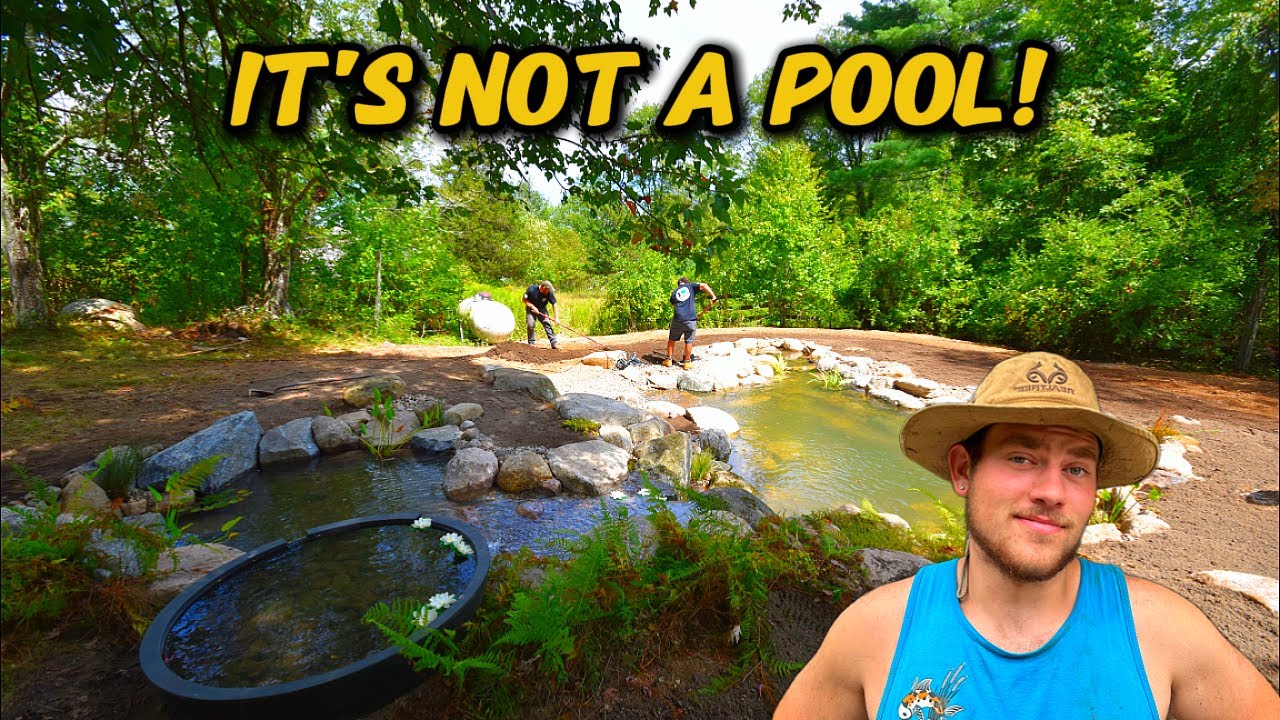
A natural swimming pond is the largest project we build, so it is no surprise that price is usually the first question. Here are the ranges we work with across Massachusetts, Rhode Island, Connecticut and southern New Hampshire, what moves a project up or down within its range, and what it costs to own one once the water is in.
The Short Answer: Three Size Ranges
We build natural swimming ponds in three general sizes. Each figure below is a range based on real New England projects, not a quote.
- Children's or small recreational pond: about 18 by 25 feet, 3 feet deep, with a 3 foot stream. Roughly $120,000 to $165,000.
- Average swimming pond: about 25 by 30 feet, 4 feet deep, with a 5 foot stream. Roughly $165,000 to $275,000.
- Large swimming pond: about 30 by 40 feet, 5 feet deep, with a 5 foot stream. $275,000 and up.
The same ranges apply in every state we serve, though travel time and distance to a project can affect the total. Because these are our largest builds, Connecticut, Rhode Island and New Hampshire projects are scheduled in blocks. You will get an exact price for your project after Shawn Cutroni walks the property at a Discovery Meeting. For a ballpark before that visit, our pricing calculator covers natural swimming ponds alongside every other feature we build.
Why a Swim Pond Costs More Than a Backyard Pond
Most of the ecosystem ponds we build fall between $15,000 and $42,000. A natural swimming pond is a different kind of project, not just a bigger one.
The swim zone has to be open, clear of plants and deep enough to actually swim in. Beside it sits the regeneration zone, a planted gravel wetland that cleans the water. That wetland is the biological engine of the whole system, and it has to be sized for the water volume and how heavily the pond will be used. It cannot be undersized. Depth, circulation and planting ratios all need to be balanced, which is why these are our most complex builds. If you want the science, our guide to wetland filtration explains how the plants and bacteria do the work a chlorinator does in a pool.
Time is part of it too. A typical residential ecosystem pond takes 2 to 5 days from first shovel to running water. Most natural swimming ponds take 3 to 4 weeks.
What Moves the Price Within a Range
Two ponds of the same size can land at different ends of a range. These are the factors that make the difference.
Excavation and soil
Ledge slows digging and adds equipment time. Clay holds water against the liner after heavy rain, so drainage around the basin has to be planned before the dig starts. Soil conditions are one reason exact pricing follows the on-site visit.
Site access
Excavators, stone and gravel all have to reach the dig. A wide, open path to the backyard is very different from a tight side yard with a fence and a septic system in the way.
The size of the regeneration zone
A pond that will see a lot of swimmers needs more filtration area than one used for a quiet evening soak. More wetland means more gravel, more plants and more plumbing.
Entries, stone and features
A gently sloped beach entry, a jumping rock, a longer stream or a waterfall that returns cleaned water to the swim zone all add to the build. A jumping rock in particular needs real depth beneath it and a solid base so the stone never shifts. Our article on how natural swimming ponds work walks through these design choices.
Finish level
Decking, lighting and the amount of stone and planting around the edges round out the number. Some owners keep it simple and natural. Others want a full backyard destination.
What It Costs to Run
This is where a natural swimming pond compares well against a traditional pool. There are no chlorine or salt purchases, no shock treatments and no chemical closing each fall. The main ongoing costs are pump electricity and seasonal care. Our guide to how much electricity a pond uses explains what drives pump costs in general.
Seasonal care means trimming plants in the regeneration zone, keeping leaves out in the fall, flushing the wetland snorkel once a year, and scheduling a professional deep clean every few years depending on leaf load and fish population. Skipping that deeper care gets expensive, because hardened sediment is far harder and slower to remove than soft debris.
Paying for It
Natural swimming ponds are a significant investment, and many homeowners spread the cost out over time. We offer financing through Hearth, which compares offers from multiple lenders in one short application. Terms run from 2 to 12 years, and you can see rates and monthly payments in about 60 seconds with no impact to your credit score.
What Comes With the Build
- Once we start, we work every day until your feature is running.
- One year parts and labor on everything we supply and install, with longer coverage on pumps, lights and other components. Component-specific coverage and exclusions apply; see our warranty terms.
- Seasonal care and membership programs through our maintenance service, for ponds we build and ponds we did not.
How to Get an Exact Number
Every project starts with a free phone call. If a swim pond looks like a fit, the next step is an on-site Discovery Meeting. It is a paid, flat-fee visit, and the fee is applied toward your project when you move forward with us. The meeting typically runs 60 to 90 minutes, Shawn checks sun, grade, soil and space, and you get a written follow-up summary with no obligation to hire us. Before that visit, it is worth reading whether your yard is right for a natural swimming pond.
Frequently Asked Questions
How much does a natural swimming pool cost in Massachusetts?
A children's or small recreational pond, about 18 by 25 feet and 3 feet deep, runs roughly $120,000 to $165,000. An average swimming pond, about 25 by 30 feet and 4 feet deep, runs roughly $165,000 to $275,000. Large ponds around 30 by 40 feet and 5 feet deep run $275,000 and up. The same ranges apply in Rhode Island, Connecticut and southern New Hampshire. Your exact price follows an on-site Discovery Meeting.
Is a natural swimming pond cheaper to run than a chlorine pool?
Usually, yes. There are no chlorine or salt purchases, no shock treatments and no chemical closing each fall. The main ongoing costs are pump electricity and seasonal care of the regeneration zone, such as trimming plants, skimming leaves, a yearly flush of the wetland snorkel and a professional deep clean every few years.
Why is the price range so wide?
Size and depth drive the number more than anything else. Within a size, the price moves with excavation conditions such as ledge or clay, how easily equipment can reach the dig, how large the regeneration zone needs to be, and extras like a beach entry, jumping rock, stream length, decking or lighting.
Can I finance a natural swimming pond?
Yes. We offer financing through Hearth, which compares offers from multiple lenders in one short application, with terms from 2 to 12 years. You can see rates and monthly payments in about 60 seconds with no impact to your credit score.
Talk to New England Aquatic Landscaping
If you are weighing a natural swimming pond, we will give you an honest answer about what your property can support and what it will cost. See the full natural swimming ponds service page, browse the swim pond learning center, or read about our work in Framingham, Connecticut and Barrington. Reach out through our contact page or call (774) 437-1160.