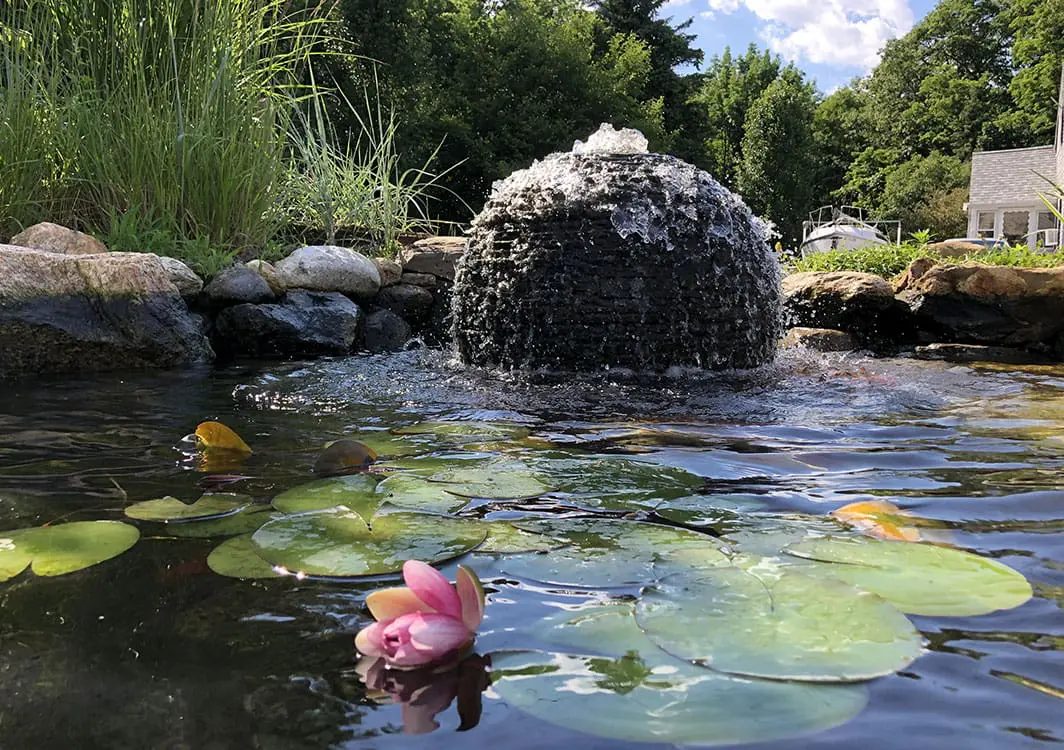
Your pond can look perfect on a July afternoon and still be running short on oxygen. Heat changes the chemistry of the water in ways you cannot see, and the fish feel it before you do. Here is what is actually happening below the surface and how proper pond aeration keeps the whole system breathing.
The Summer Oxygen Squeeze
There is a basic rule of physics behind summer pond care: the warmer water gets, the less dissolved oxygen it can hold. Cold water in April holds a lot of oxygen. The same pond at 80 degrees in late July holds noticeably less.
At the exact same time, demand goes up. Fish are cold-blooded, so their metabolism speeds up as the water warms. Your beneficial bacteria are fully awake and working hard. Leaves, fish waste, and sludge on the bottom are decomposing faster, and decomposition uses oxygen too.
Supply drops while demand climbs, and nothing looks wrong until the morning you find stressed fish.
Why Oxygen Is Lowest Right Before Dawn
Most people assume the hottest part of the afternoon is the danger zone. In terms of oxygen, the real low point is just before sunrise.
During the day, aquatic plants and algae produce oxygen through photosynthesis. Once the sun goes down, that process stops, and plants and algae start consuming oxygen just like the fish and bacteria. All night long, every living thing in the pond is drawing down the supply and nothing is adding to it except the water movement you provide.
By dawn, levels reach their lowest point of the day. On a warm, still, overcast night, that dip can get dangerous.
The morning coffee test
You do not need a meter to spot trouble. Walk out to the pond first thing in the morning with your coffee and watch the fish for a minute.
- Fish crowding at the base of the waterfall, where the water is most oxygenated
- Fish hanging at the surface and gulping air
- Fish that are sluggish or unresponsive when you walk up
Any of those means your nighttime oxygen is running too low. Fix it before the next hot spell.
What We Watch During Peak Summer Heat
On July and August maintenance visits, we check the conditions that keep oxygen in the water.
- Water velocity. Streams and falls slow down when debris screens and skimmer baskets clog. Less flow means less oxygen added and weaker circulation through the filters.
- Aeration depth. Oxygen needs to reach the dark, cool water near the floor, not just churn around at the surface.
- Fish behavior. Once the water climbs past 70 degrees, we pay close attention to how the fish are moving and where they are hanging out.
When oxygen is right, water stays clearer and bacteria thrive. Our pond maintenance service keeps an eye on all of this through the hottest stretch of the year.
Surface Aeration vs. Bottom Aeration
A waterfall is a great aerator. Water tumbling over rock picks up oxygen and releases carbon dioxide and other gases. In a typical backyard ecosystem pond around 2 feet deep with good circulation, a properly sized waterfall and skimmer do most of the work.
The limitation is that a waterfall oxygenates the top of the pond. In deeper water, or in a pond where circulation does not reach every corner, the bottom can be a very different place.
Bottom diffused aeration works from the other direction. An air pump on shore pushes air through weighted tubing to a diffuser on the pond floor. The diffuser releases a column of fine bubbles that rises to the surface. That column does two things:
- It drags cold, low-oxygen bottom water up to the surface, where it can exchange gases with the air.
- It keeps the entire water column turning over, so oxygen reaches the floor where decomposition is happening.
The real value is the circulation the bubbles create from the bottom up.
The Thermocline Problem in Deeper and Farm Ponds
In deeper ponds, especially farm ponds and larger earthen ponds, summer heat creates layers. The sun warms the top few feet, and that warm water floats on top of a cold, dense layer near the bottom. The boundary between them is called the thermocline.
Once a pond stratifies, the two layers barely mix. The bottom layer gets cut off from the air and from the oxygen the surface picks up. Meanwhile, leaves, sludge, and waste down there keep decomposing and keep using up oxygen. The bottom goes stagnant, sometimes completely anoxic, and starts producing foul-smelling gases.
That pond is quietly suffocating from the ground up, and a cold rain or windstorm that suddenly mixes the layers can trigger a fish kill.
At a farm pond in Massachusetts, Shawn Cutroni demonstrated how a bottom aeration system breaks the thermocline. With air delivered at the floor, the rising bubble column keeps the layers mixing, the bottom gets oxygen again, and a stagnant body of water starts behaving like a living one.
Pro tip: Think of bottom aeration as 24/7 life support for a deep pond. The bottom is where the oxygen debt builds up, so the bottom is where the air needs to go.
Does Your Pond Need an Aerator?
Not every pond needs a separate aeration system. Here is how to think about it.
Backyard ecosystem ponds
A well-built backyard pond with a correctly sized pump, a skimmer, a biological filter, and a waterfall usually has enough oxygen and circulation on its own. An aerator becomes a smart addition if any of these apply:
- You keep a lot of fish or larger koi
- The pond is deeper than typical, or has a deep zone the circulation does not reach
- The waterfall is small relative to the size of the pond
- You see fish gulping at the surface on hot mornings
- You want backup oxygen in case the pump fails during a heat wave
Overcrowding deserves special mention. We have reset a pond holding hundreds of koi, and the symptoms were classic: heavy waste, murky water, algae, and stressed fish. More fish means more oxygen demand around the clock.
Large ponds and farm ponds
For larger earthen ponds, farm ponds, and anything deep enough to stratify, bottom diffused aeration is close to essential. There is usually no waterfall, and even when there is, it cannot reach the bottom of a pond that size. Diffusers are sized and placed based on the pond's depth, shape, and surface area.
If you are not sure which category your pond falls into, our pond aeration service starts with a look at depth, fish load, and how the water is moving now.
Run It 24/7 Through Summer
Turning aeration off at night to save power is backwards. Night is when oxygen falls, and the hours just before dawn are when your fish need help most. Through July and August, keep aerators and pumps running around the clock.
During long hot stretches, keep skimmer baskets and debris screens clean and watch the fish closely. Our guide on how to keep your koi safe during a heat wave walks through the warning signs and the quick fixes.
Aeration Matters in Winter, Too
Oxygen problems do not end when summer does. Under ice, organic material on the bottom keeps decomposing, and the gases it releases need somewhere to go.
A small aerator or de-icer keeping one hole open in the ice gives those gases an escape route and lets oxygen in. Place the air stone in a shallower spot so you do not circulate the coldest water through the deep zone where fish are resting. And never smash a hole in the ice, since the shock waves stress fish. Our post on why you should not break up the ice in winter explains the right way to keep that opening.
Frequently Asked Questions
How do I know if my pond is low on oxygen?
Watch your fish early in the morning, when oxygen is at its lowest. If they are crowding the base of the waterfall, gulping at the surface, or moving sluggishly, oxygen is likely running low overnight. Other clues include a sour or rotten smell, sudden cloudiness, and algae die-offs during hot, still weather.
Is a waterfall enough aeration for a pond?
For many backyard ecosystem ponds around 2 feet deep with good circulation, yes. A properly sized waterfall adds a lot of oxygen at the surface. Deeper ponds, heavily stocked ponds, and large or farm ponds usually need bottom aeration as well, because a waterfall cannot move oxygen down to the floor.
What is a thermocline in a pond?
A thermocline is the boundary between a warm upper layer of water and a cold, dense bottom layer that forms in deeper ponds during summer. The layers do not mix, so the bottom gets cut off from oxygen. Bottom diffused aeration breaks up the thermocline by keeping the whole water column circulating.
Should I run my pond aerator at night?
Yes. Oxygen drops overnight because plants and algae stop producing it and start consuming it. Levels are lowest right before dawn, which is exactly when fish are most at risk. Run aeration 24 hours a day through the summer, and do not put it on a timer that shuts it off at night.
Do I need aeration in winter?
Keeping one small opening in the ice is important. Decomposing material under the ice releases gases that need to escape. A small aerator or de-icer placed in a shallow spot keeps that hole open without chilling the deep water where fish are resting. Never break the ice by hitting it.
Talk to New England Aquatic Landscaping
If your fish are gasping on summer mornings, or you have a deeper pond that turns stagnant every August, it is time to look at aeration. We size and install aeration systems for backyard ponds, koi ponds, and farm ponds across Massachusetts, Rhode Island, Connecticut, and New Hampshire. Contact us or call (774) 437-1160 to talk through what your pond needs.