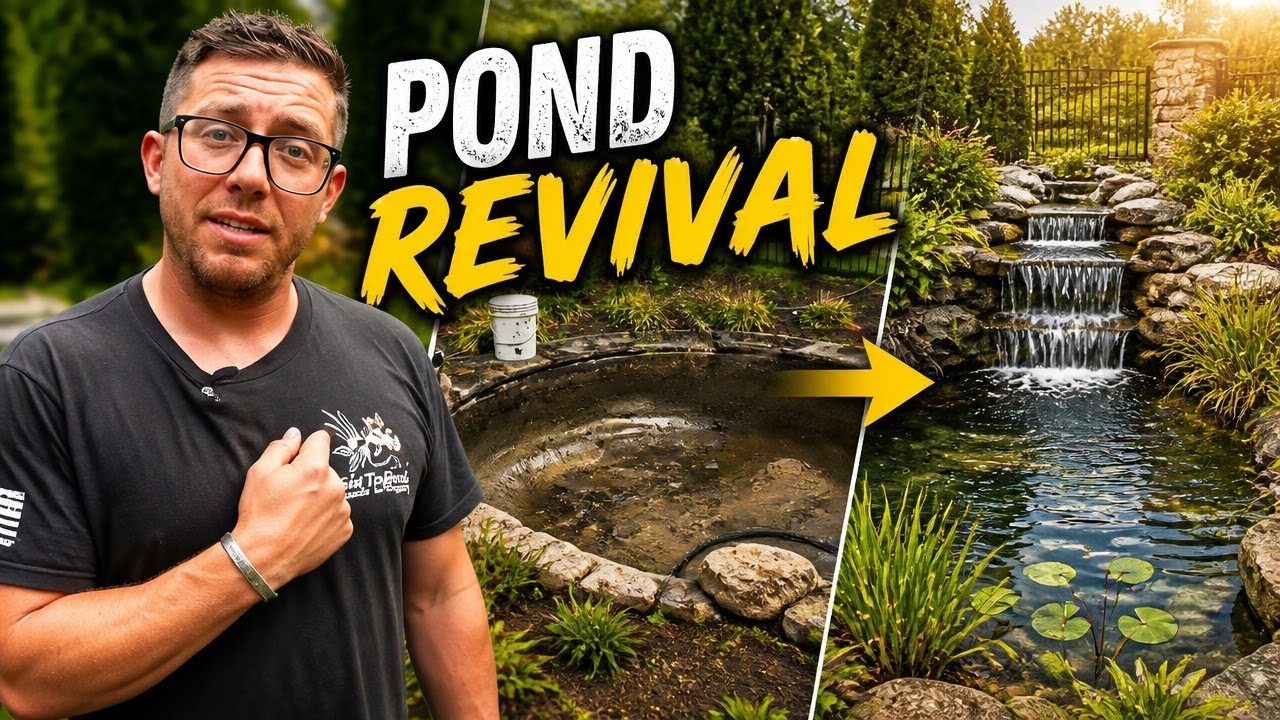
There is a stubborn myth in our industry that an ecosystem pond has to look like a wild mountain stream, with massive boulders, gravel beaches, and plants spilling over every edge. If your home has crisp, formal architecture, that can sound like a deal breaker. It is not. You can have clean lines and clear, living water at the same time.
What Actually Makes a Pond an Ecosystem
An ecosystem pond is defined by how it works, not how it looks. Boulders and gravel are common because they do certain jobs well, but the jobs are what matter. Every healthy ecosystem pond relies on the same core parts:
- Mechanical pre-filtration: Catching leaves and debris before they sink and break down into algae fuel.
- Biological filtration: Oxygen-rich zones where beneficial bacteria break down fish waste and excess nutrients.
- Circulation: Moving the full volume of water through the system so there are no stagnant corners.
- Aquatic plants: Lilies, marginals, and bog plants that act as nutrient sponges and outcompete algae.
- Fish: They graze on algae and insects and complete the nutrient cycle.
- Surface area for bacteria: In a naturalistic pond this is rock and gravel. In a formal pond it can live inside filters and planted beds.
Read that list again and you will notice nothing on it requires a rustic look. Each piece can be built into a formal design. It just has to be planned in from the start or retrofitted with care.
For the full picture of how these parts work together, see our ecosystem ponds page.
The Problem With Most Old Formal Ponds
Many formal water features were designed purely as architecture. A concrete basin, a crisp stone coping, maybe a fountain jet in the middle. What they often lack is any real filtration at all.
We recently visited a historic concrete pond wrapped in traditional bluestone that fit that description exactly. It was rigid and beautiful, but it had zero original filtration. The result was stagnant water: green, cloudy, and constantly in need of attention.
Stagnant formal ponds tend to share the same problems:
- Algae blooms every summer, because nothing is removing nutrients.
- Muck building up on a flat concrete floor with no circulation to move it.
- Low oxygen, especially on warm nights, which stresses any fish in the pond.
- Mosquito breeding in still water.
- A maintenance routine built around draining, scrubbing, and chemicals.
The good news is that the structure itself is often worth keeping. The goal is to upgrade the inner workings without losing an ounce of the classic, high-end look.
How Filtration Hides Inside Clean Architectural Lines
The secret to a formal ecosystem pond is putting the hardworking parts where you cannot see them. Here are the main tools we use.
External Pressure Filters, Buried Out of Sight
For homeowners who want pristine clarity but do not want a large filter box sitting in the landscape, an external pressure filter is a great option. These compact units can be buried completely out of sight in the surrounding plantings.
They use pressurized water to trap fine debris and give beneficial bacteria a place to grow. The cleaned water is then plumbed back to a formal fountain or spillway bowl, so the only thing you see is the water itself.
Pro tip: When you bury a pressure filter, plan an access point you can reach easily. Most units have a backwash or cleaning feature, and you will use it far more often if it is not hidden behind a shrub you have to crawl under.
Intake Bays Instead of Visible Skimmers
On larger or more architectural builds, an intake bay can replace a traditional skimmer. Water is drawn into a dedicated chamber, often concealed beneath decking, coping, or a stone ledge, where debris is captured and pumps are housed. The intake does the work of a skimmer while keeping the pond edge clean and uninterrupted.
Spillway Bowls and Formal Water Returns
In a naturalistic pond, filtered water usually returns over a rocky waterfall. In a formal pond, it can return through a spillway bowl, a sheer descent, a weir cut into stone, or a fountain. These features add oxygen and movement just like a waterfall does, but in a shape that matches the architecture.
BioFalls and Biological Filters Behind the Scenes
A BioFalls style biological filter can sit at the head of a water feature with its face dressed in stone, so it reads as part of the hardscape rather than a piece of equipment. Inside, filter media gives bacteria the surface area they need to keep water clear.
Formal Wetland Beds
A wetland filter does not have to look like a marsh. A geometric planted bed, edged in the same stone as the pond, can push water up through gravel and plant roots before returning it to the main basin. It is one of the most powerful forms of natural filtration there is. Learn more in what is wetland filtration.
A Real Example: Starting Over With All of the Above
Sometimes a homeowner sees what a fully integrated system can do and decides to go all in. One of our longtime VIP maintenance clients, Joe in Norfolk, Massachusetts, spent an evening at a customer appreciation party at the Cutroni family home, right beside a personal backyard pond. He was so taken with it that he decided not to keep tweaking his existing setup.
Instead, he chose to tear the old pond out completely and start from scratch. The crew moved his fish to a temporary holding setup, removed the old features, and began excavating a multi-level build designed around intake bays, custom spillway bowls, and BioFalls. Every one of those components does a filtration or circulation job while also shaping how the finished pond looks.
That is the real lesson for formal design. The equipment is not something you hide after the fact. It is part of the design vocabulary.
Retrofit or Rebuild?
If you own an older formal pond, the next question is whether it can be upgraded in place or needs to start over. A few signs suggest it is time for a renovation of some kind:
- Persistent algae: A pond that is more green than clear usually has a filtration or water quality problem.
- Murky or cloudy water: This points to poor circulation or inadequate filtration.
- Structural damage: Cracks, leaks, or eroded edges lead to water loss and get worse each winter.
When a Retrofit Makes Sense
If the concrete shell is sound and the stone coping is in good shape, a retrofit is often the smart move. Filtration can be added with buried pressure filters or a concealed intake, returns can be reworked into spillways or fountains, and planting pockets or a formal wetland bed can be added nearby.
In some cases, a fish-safe rubber liner can be installed inside an old concrete basin to stop leaks while keeping the original coping and footprint.
When a Rebuild Is the Better Investment
If the concrete is badly cracked, heaving from freeze-thaw, or leaking in multiple places, patching rarely lasts in a New England climate. The same is true if the pond is too shallow to protect fish through winter or the layout simply cannot accommodate filtration. In those cases, a rebuild lets you keep the formal style while designing the system correctly from the ground up.
Setting matters, too. We rebuilt a 25-year-old pond at The Butterfly Place in Westford, Massachusetts, where the feature sits indoors. As Shawn explained during that project, an outdoor build can use machines, while an indoor one means digging everything by hand. Access, structure, and surroundings all shape what is practical.
Our repairs and renovation team can assess an existing formal feature and lay out both paths so you can decide with clear information.
Frequently Asked Questions
Can a formal pond be an ecosystem pond?
Yes. An ecosystem pond is defined by how it works: mechanical pre-filtration, biological filtration, circulation, plants, fish, and surface area for beneficial bacteria. All of those can be built into a formal design using hidden filters, concealed intakes, spillway bowls, and geometric planted beds, so you keep clean lines and still get clear, living water.
How do you filter a formal pond without a visible filter box?
Common options include an external pressure filter buried in the surrounding landscaping, an intake bay concealed beneath coping or decking, and a biological filter dressed in stone. Filtered water returns through a fountain, weir, or spillway bowl, so the equipment stays out of sight and only the water shows.
Why is the water in my old concrete pond always green?
Many older formal ponds were built with little or no filtration. Without mechanical and biological filtration, circulation, and plants, nutrients build up, oxygen drops, and algae takes over. Adding hidden filtration and reworking how water moves through the pond usually solves the problem without changing the look of the feature.
Should I renovate or rebuild my formal pond?
If the shell and stonework are sound, a retrofit with hidden filtration and better circulation often works well. If the concrete is badly cracked, heaving, leaking in several places, or too shallow for fish, a rebuild is usually the better long-term investment. A site visit is the best way to compare both options.
What is a spillway bowl?
A spillway bowl is a shaped basin that fills with water and spills over its edge into the pond below. In a formal ecosystem pond, it often serves as the return point for filtered water, adding oxygen and the sound of moving water in a clean, architectural form instead of a rocky waterfall.
Talk to New England Aquatic Landscaping
If you have a formal pond that looks beautiful but never stays clear, or you want a new feature that matches your home's architecture without giving up healthy water, we would be glad to help. We design, renovate, and maintain ponds across Massachusetts, Rhode Island, Connecticut, and New Hampshire. Contact us online or call (774) 437-1160 to start the conversation.